Healthcare now includes more than just doctors and diagnostics. It is focused on data.
Prescriptions, test results, and patient histories are all examples of conversations that leave behind information that should be stored, gathered, and easily understood. When you look at the urge to "do more with less," more strict legal obligations, and rising patient expectations, the actual difficulty becomes visible.
This is when technology subtly enters the picture.
The healthcare virtual assistant industry was estimated to be worth almost $705 billion in 2022. That is not just growth, but a signal. Healthcare is now covering more than just treatment. It includes programs that help with better decision-making, faster processes, and more personal attention.
And in the middle of this change? The virtual assistant for the EHR.
What is EHR And Why It Matters More Than Ever
Let's keep things simple.
Electronic health records, or EHRs, are digital patient records. But they are more than just places to store information. These are systems that keep an eye on:
-
Medical history
-
Medications that are prescribed
-
Results from the lab
-
Diagnoses
-
Plans for medical treatment
The most recent data has been included in everything. So, when needed, everything is accessible.
Doctors don't have to speculate. They do not need to look through documents. The information is currently accessible, easily searchable, and neatly organised to help with a better ability to make choices.
Also, a reliable EHR does more than merely keep information. It improves the way patients are cared for.
Different Types of EHR Systems
Every EHR system works differently. Each one is made to work with a particular type of healthcare system. Here is a short explanation of the most popular types:
EHR on-site: The system used in a hospital or clinic is directly connected to this technology. Although it needs internal maintenance and IT support, you have complete control over all the information of the patients and security.
EHR for inpatients: This system keeps track of a patient's whole journey. Since the patient has been admitted until discharge. It’s mainly used in hospitals. It keeps a record of blood results, treatments, and medical history all in a single location.
EHR for outpatients: Best for working in consulting and clinical settings. For patients who don't need to stay overnight, it helps doctors to document all the information, such as patient visits, diagnosis, and treatment plans.
Emergency Department Information Systems (EDIS): Meant for hectic emergency rooms. It immediately collects and arranges the information of the patient so that the medical team can make quicker, more accurate judgments in life and death situations.
EHR with a Speciality Focus: It’s basically for particular industries, such as pharmacy, surgical, or mental health clinics. They have procedures and features needed for that specific skill.
In short, every EHR system has a unique function, but they all want the same thing to improve the accuracy, speed, and structure of medical treatment.
Why EHR is Not Optional Anymore
EHR systems do more than simply ease life. They improve healthcare.
-
Diagnosis accuracy becomes higher using immediate access to information
-
Patients can see their own health information
-
Errors in documents have been significantly reduced
-
Data sharing gets safer and quicker
That's only the surface, though.
Let's check the full capabilities of EHR in the background as well.
What EHR Systems Actually Handle The Work You Don’t See
EHR is more than file storage. It actually helps with operations:
-
Help with Coding: Medical billers are able to file insurance claims more quickly and code diagnoses.
-
Support for Documentation: Pre-made templates improve precision and cut down on manual entry.
-
Data Extraction: Data extraction APIs and NLP systems quickly and successfully get relevant information.
-
Automation of Progress Notes: Included in notes that are put together, which include treatment plans and summaries of their visit.
-
Scrubbing Data: Automatically corrects incomplete, inaccurate, or duplicate information.
-
Summarisation of Notes: Changes lengthy medical records into understandable, useful information.
-
Data Capture Automation (EDC): Easily moves information from clinical trials between systems.
To put it simply, EHRs do more than just record information. It makes sense of it, sorts, and clears up.
So, who is an EHR Virtual Medical Assistant?
See them as the connection between technology and healthcare.
A virtual assistant for an EHR does more than just "help." They make things simpler.
They:
-
Keep track of patient information
-
Make appointments
-
Manage systems for insurance
-
Encourage keeping medical records
-
Communicate with patients
And they use technologies that are equipped with:
-
Artificial Intelligence
-
Machine Learning
-
Natural Language Interpretation
-
Analytics of Data
-
Recognition of Voices
The outcome when you hire an EHR virtual medical assistant, and they use these methods to do their work? Minimal administrative duties, which lead to extra time for proper care.
How Virtual Assistants Handle EHR Integration
This is the practical part of things.
An expert EHR assistant can:
-
Make sure that your medical records are accurate and free of repeated entries and confusion
-
Change them into customized reminders for both patients and healthcare professionals
-
Use patterns of information to recognise risks early
-
Use data patterns to early detect risks
-
Confirm that everything is done according to HIPAA
-
Help identify mental health concerns, such as PTSD
-
Help in tracking and monitoring the use of prescription medications
-
Offers a trial run before the long-term hiring
To put it simply, they make sure the system functions as it was meant to.
EHR Trends That Are Shaping 2026 And Beyond
Technology is constantly changing. Healthcare systems are changing with time, too.
This is what's changing:
1. More strict Interoperability Rules
It has become important for healthcare systems to communicate better than before. Easier data sharing will be achieved through programs like the Medicare Promoting Interoperability Program.
2. Sophisticated Cybersecurity
As data threats are growing day by day, more rigorous protocols and encrypted systems are becoming more important.
3. Standardisation
Organisations have to stay true to specific EHR guidelines. No shortcuts. No assumption.
4. RPA, or robotic process automation
Manual labour has been reduced through automation. quicker charting. Fewer mistakes. Patients have more time. By 2030, the RPA market is expected to reach $13 billion, with healthcare being the major factor.
5. AI as the foundation of EHR systems
Healthcare firms currently do not use AI as a "cool extra feature" in their demonstrations. It now sits at the very core of present-day EHR systems. AI is gradually cutting human labour everywhere. They are helping doctors quickly identify possible risks and automatically create clinical notes. In 2026, having digital records is not as important as having more intelligent systems. Instead of just storing data, medical professionals want technology that can think, organise, and help.
6. Cloud-based EHR systems
Old server rooms and old-fashioned on-premise systems are gradually turning into the fax machine of the healthcare industry. Cloud-based EHR platforms are much more versatile for modern healthcare teams; they are also easier to adapt and upgrade. Also, cloud services are preferred among clinics and hospitals because they speed up data exchange between doctors, improve remote access without making IT management a daily challenge.
7. Virtual care and remote patient monitoring
Nowadays, healthcare is not just found inside hospitals. AI-powered patient tracking systems, gadgets, telehealth platforms, and remote monitoring devices are becoming popular in healthcare. Doctors can now remotely and instantly check patient health data, healing conditions, and chronic illnesses. Patients are going to benefit from the immediate help without making unnecessary trips to the hospitals or clinics.
8. Clinical documentation
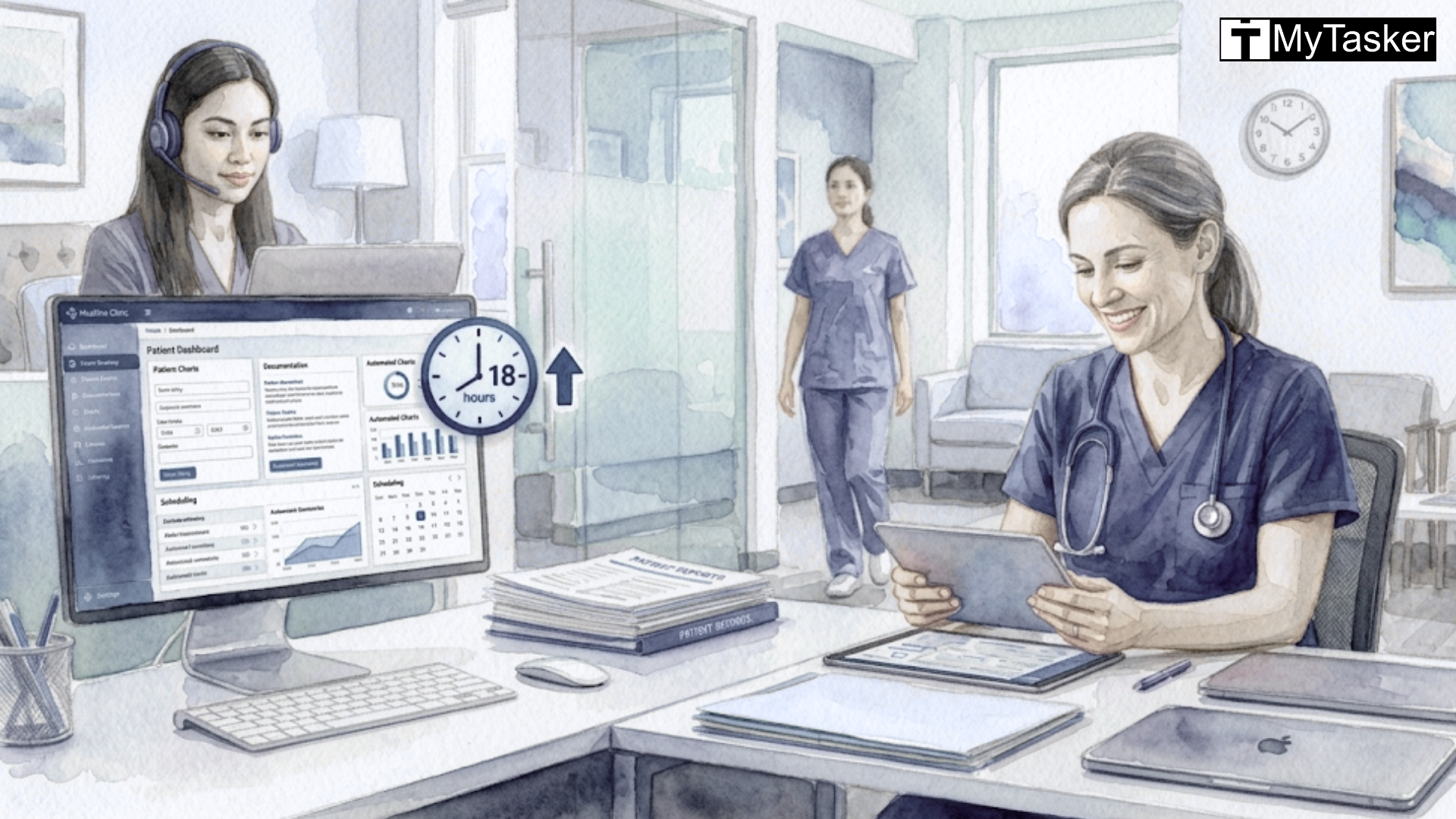
Healthcare professionals have complained for years that EHR systems cause more clicks than conveniences. The industry is finally taking notice in 2026. The goal is simple: spend more time on patient care and less time dealing with software. Without needing constant manual typing, ambient voice technology automatically creates clinical notes and updates data in precise time. Clinicians can cut documentation time by 20% to 50%, according to studies, and they can also drastically reduce after-hours charting work.
9. Value-based care models
The "more appointments, more billing" approach in healthcare is gradually giving way to a more patient-centric approach. With almost 77% of hospitals and healthcare systems expecting to grow value-based care (VBC) programs in 2026, this trend is only going to get stronger. Healthcare practitioners are reporting lower healthcare costs and more patient satisfaction since value-based models have been introduced in the healthcare industry, as they are more personalized and connected.
Top Benefits of an AI-Driven EHR Assistant
It all comes together at this point.
Economic Effectiveness: Less manual labour and more intelligent operations can result in a lower operating cost.
Higher Productivity: Doctors get to spend more time with patients and less time on systems.
Faster Help for Patients: With EHR Assistant, get quick answers. better communication, and stronger connections.
Expert-Level Performance: VAs with training are familiar with the terms used in medicine, medical equipment, and processes.
Availability 24/7: Healthcare is never-ending, and so are the services delivered by the assistance virtual assistants. It’s for 24/7.
Healthcare Needs Systems That Think
An EHR virtual assistant is more than just a support worker.
They support the system.
They lessen the complexity of the system.
They help improve clarity as well.
They help medical professionals focus on their patients, who are what truly matter.
We offer more than just assistance at MyTasker. We bring a suitable structure.
We help healthcare professionals in making the transition from being overburdened to being organised, from being reactive to being effective, and from being busy to being productive.
Better systems can do more than merely improve operations.
They improve results.
Frequently Asked Questions
1. What purpose does a virtual assistant fulfil in the medical field?
A virtual assistant in healthcare takes care of the tasks that cause doctors to work slowly. They keep everything functioning properly so medical professionals are able to focus on delivering care, including setting up appointments and keeping track of EHR data, to managing interactions with patients and medical insurance processing.
2. What advantages do medical practitioners have when using an electronic health record (EHR)?
EHR systems can bring structure to chaos. They ease communication, reduce errors in documentation, increase the accuracy of diagnosis, and offer instant access to patient data. In short, they improve healthcare by making it quicker, safer, and more precise.
3. What are the most important skills for a medical assistant?
Tech proficiency, communication skills, a thorough knowledge of medical terminology, and attention to detail. You have someone who can succeed in a hectic healthcare industry if you add flexibility and awareness about privacy.
4. Is it possible for an EHR virtual assistant to reduce stress among doctors?
Yes, and in a big way. EHR VAs give doctors more time and mental space. They manage administrative tasks, schedule appointments, and handle paperwork. Fatigue gets decreased, and patient involvement is improved with less paperwork. According to studies, with the correct virtual assistant support and AI-powered solutions, doctors can cut down on documentation time by 20% to 50%.
5. Is it safe for virtual assistants to handle EHR data?
Expert EHR virtual assistants use secure technologies, follow strict HIPAA compliance rules, and guarantee that patient data is protected at all times. To protect sensitive patient data, professional VAs use systems like automated audit trails, Data Loss Prevention (DLP) software, VPNs, multi-factor authentication, end-to-end encryption, and even blockchain-backed security.
6. How do virtual assistants help with lab results?
Virtual assistants help organise, update, and monitor lab findings within EHR systems. They can keep an eye on incomplete reports, find information that is missing, update patient records, and confirm that results are sent to the correct department or doctor on schedule. For a quick review, they often take the help of some AI-supported systems to summarise important findings.
7. Can virtual assistants maintain the accuracy of medical records?
Yes, and one of the main reasons medical professionals depend on them is their accuracy. Expert virtual assistants strictly stick to organising documentation procedures, verifying patient data, and regularly updating records. They help with incomplete entries and duplication. Many work together with automated EHR systems to prevent human error.