1. Executive Summary: The Synergy of Human Strategy and Artificial Intelligence
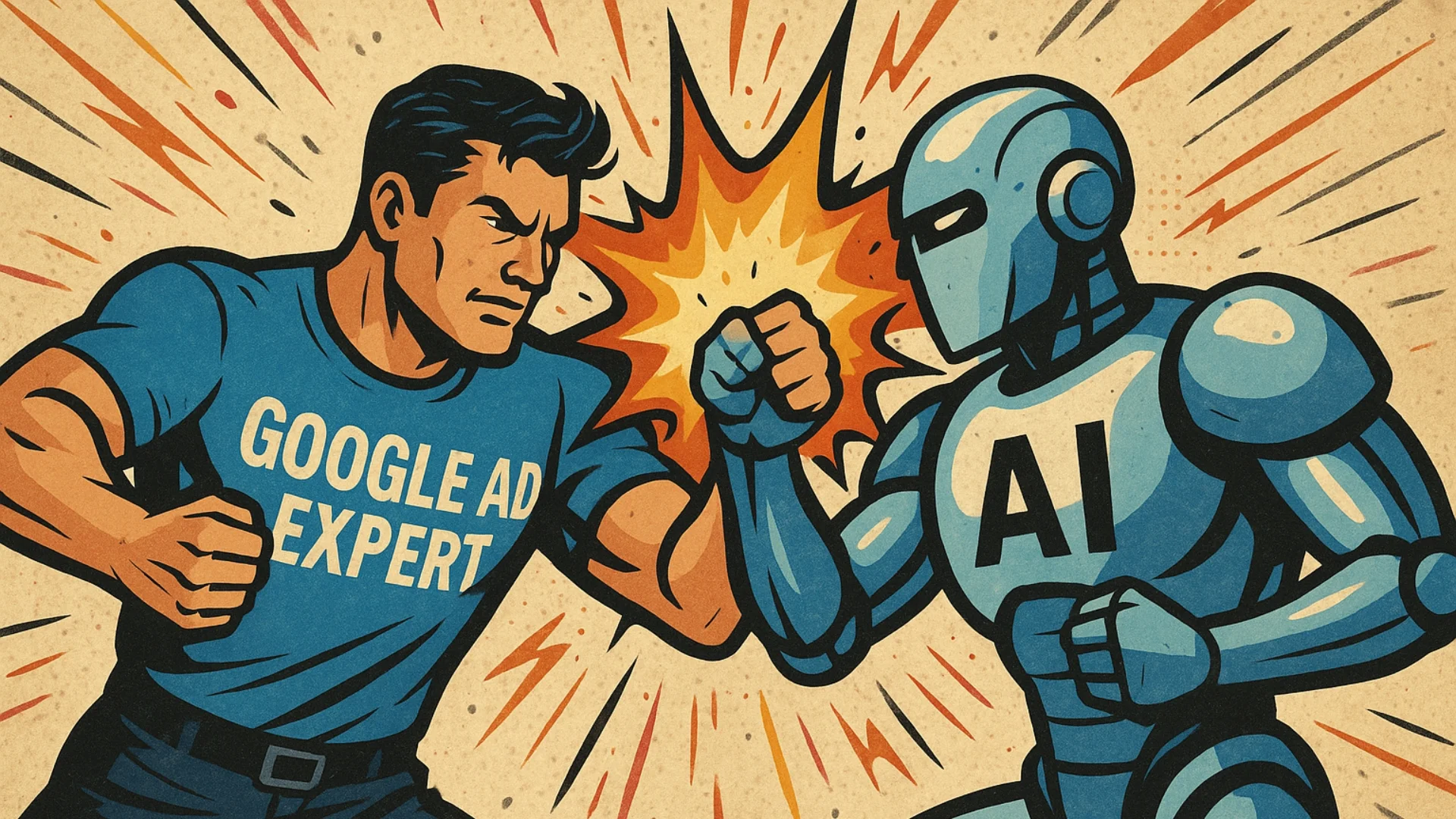
The idea that Google Ads experts are just “expensive middlemen” is a simplification of the modern digital marketing landscape. While Google’s AI has made basic ad management and tactical tasks automated, it’s also elevated the role of the human expert from manual operator to strategic orchestrator.
This article shows that the most profitable and risk-mitigated Google Ads campaigns today are not driven by AI alone, but by the synergy between human intelligence and artificial intelligence.
The expert’s value is not in executing tasks an algorithm can do faster, but in providing strategic vision, market nuance, creative direction and critical oversight that AI can’t replicate. The cost of an expert is not a redundant expense but a strategic investment that acts as a force multiplier for campaign performance, a necessary safeguard against platform biases and a direct path to a measurable and sustainable return on investment (ROI).
They are not just Google Ads editors who craft compelling ad copies and optimize ad performance; they’re your go-to Google partner in the paid marketing journey. Even when it comes to shortlisting which AI tools and features to use, their insights are invaluable.
But what if you’re running low on budget and prefer not to hire a marketing agency? Can AI alone and DIY be your savior? We’ll discuss that soon.
2. The Age of Automation: An Unprecedented Power, A Significant Caveat
The last decade has seen a fundamental shift in how Google Ads campaigns are managed. The platform has moved from a manual, keyword-centric system to an AI-first ecosystem, using machine learning to handle complex, time-consuming tasks at unprecedented scale. This has brought powerful tools that have redefined efficiency and performance.
What is Smart Bidding?
The cornerstone of this new ecosystem is Smart Bidding, an AI-driven feature that automates bidding in real-time for each individual auction.
A human strategist can’t process the vast amount of contextual data the AI uses to set a bid which includes signals like user device, location, time of day, browser, operating system and remarketing lists. The AI can find patterns that lead to higher conversion probabilities and adjust bids in milliseconds, something no human can do.
Research shows that as campaigns grow and accumulate more data, usually at least 15-20 conversions per month, Smart Bidding strategies like Maximize Conversions and Target ROAS can deliver a stronger ROI by optimizing bids based on countless signals.
This same principle applies to Performance Max (PMax) campaigns which are designed to save time and optimize ad spend across Google’s entire network including Search, Display, YouTube, Discover and more all from one campaign.
For businesses especially small ones this sounds ideal. Real-world case studies prove PMax can deliver results. One test compared a PMax campaign to a manual Local Campaign and PMax delivered 10.57% more conversions which was nearly a 200% increase showing its power in automating and using machine learning to find qualified prospects and optimize ad budgets.
Plus generative AI has made the initial campaign creation process even simpler. Google’s new AI tools can scan a business’s website to generate relevant keywords, headlines, descriptions and other ad assets, freeing up time that was previously spent on manual creative work.
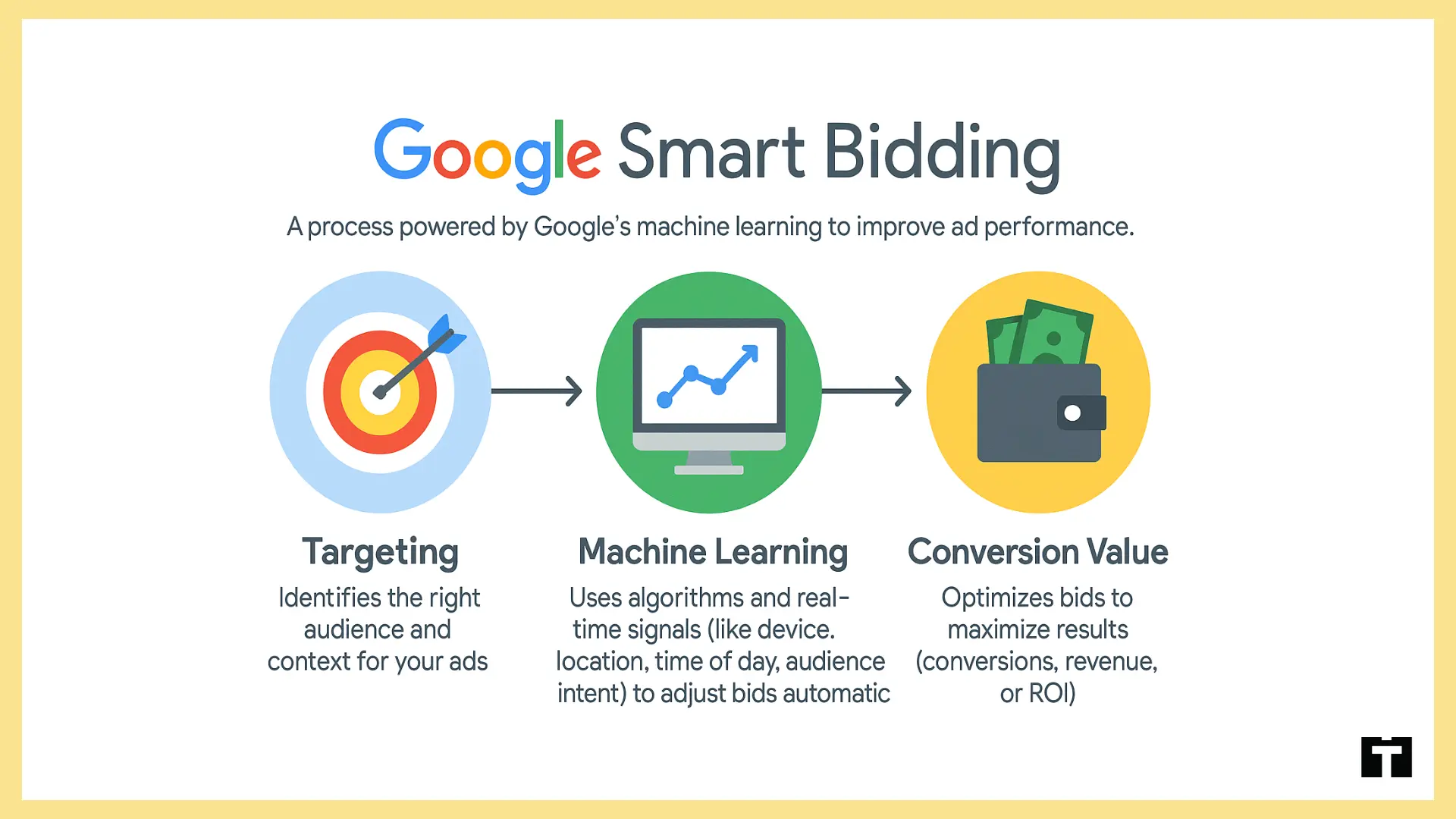
Despite these powerful features a closer look at AI-driven systems reveals a significant caveat: they are not transparent.
These automated platforms especially PMax operate as a “black box” leaving marketers in the dark about how and why decisions are made. This lack of transparency is a big problem for advertisers who want to truly understand their campaigns and maximize their performance.
Marketers have no clear view of how budgets are being distributed, which audiences are being targeted or where their ads are being placed.
The consequences of this opacity can be severe. A deeper dive into the system’s output reveals a critical issue: misleading metrics. Research shows metrics like low cost-per-click (CPC) or high conversion rate can be deceiving if they don’t align with business outcomes.
For example, a PMax campaign could have high conversion count but attract customers who make low value purchases or worse generate traffic from bots. This is like a popular social media page with many followers, a significant portion of which are bots.
The lack of visibility means the advertiser can’t audit the campaign to determine the true value of the leads and conversions. An account can look good on paper with high conversion numbers but simultaneously draining the business’s budget on unqualified prospects or spam traffic.
It’s precisely this information gap that a human expert is needed to bridge, connecting the ad performance to the real-world profitability and long-term goals of the business.
3. Beyond the Algorithm: The Irreplaceable Value of Human Expertise
The strategic value of a Google Ads expert is no longer in manual optimizations but in the high-level, human-centric tasks that AI can’t perform. A modern expert is not a redundant operator but an essential partner who provides direction, nuance and critical oversight.
The synergy of human intellect and AI’s processing power is the true engine of profitable campaign management.
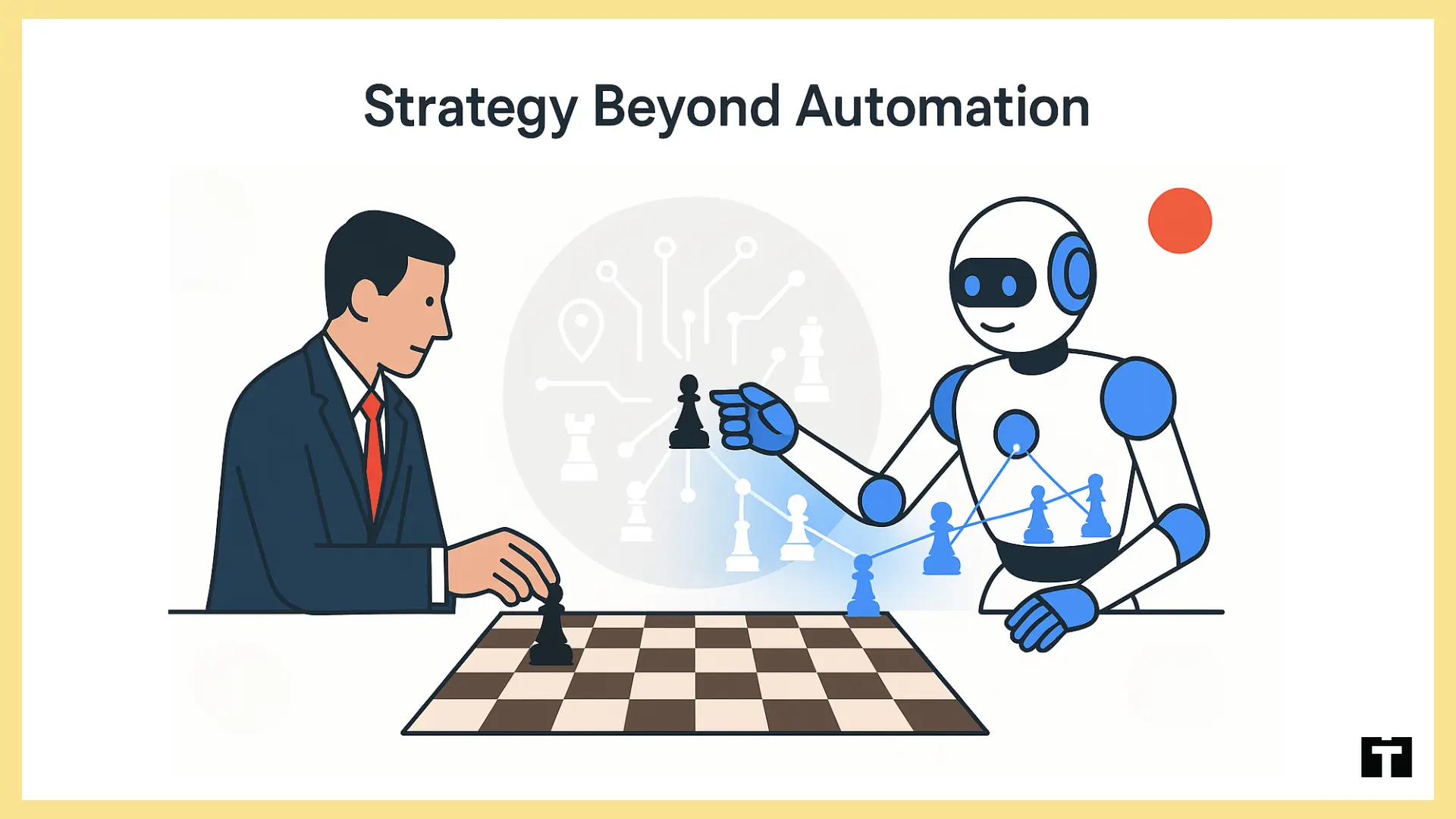
Strategic Vision and Goal Alignment
AI is a powerful optimizer but its function is to serve the goals it is given. It’s a tool without a compass. The human strategist is the one who sets the compass, aligning campaign objectives with the overall business mission.
An expert understands the “why” behind the goals—whether it’s maximizing sales, generating high-quality leads, building brand awareness or focusing on profitability (ROAS). This role requires interpreting market shifts and setting the right key performance indicators (KPIs) in a way that an algorithm can’t.
The automation of mundane tasks has led to a strategic reallocation of a professional’s time. The time “saved” by AI is not for leisure but to be reinvested into higher-level, more impactful work that AI can’t do. As one expert notes, the purpose of automation is to “release the human from the robot and create capacity for thought”.
An expert’s time is now dedicated to strategic thinking, innovative campaign design and a deep analysis of how advertising performance impacts the broader business. This elevates the expert’s value, transforming them from a tactical “doer” to a strategic “thinker” who provides essential direction and oversight.
Creative Innovation and Emotional Resonance
While AI can assemble headlines and descriptions it lacks the emotional intelligence to create compelling copy or visuals from scratch. The human marketer’s role is to craft persuasive narratives, develop unique selling propositions and design captivating creatives that resonate with the target audience on a deeper, emotional level.
This ensures the brand’s voice and storytelling remain authentic and impactful which is a key differentiator in a crowded market. The human touch is also necessary for A/B testing AI-generated assets against human-written copy, a critical step to ensure AI output aligns with brand voice guidelines.
Problem-Solving and Critical Intervention
AI can identify patterns in campaign performance but it requires a human to diagnose the root cause of an issue. You need a human guidance to figure out when you need a new Google Ads Account. When a campaign underperforms an expert’s critical thinking is essential to determine if the problem is a technical glitch, a change in user behavior, a new competitor or a flawed strategy.
The research provides many examples of automation pitfalls that require an expert’s intervention to prevent costly mistakes and campaign failure. These include:
Setting Unrealistic Goals
A common and costly mistake for inexperienced users is to set a target cost-per-acquisition (CPA) that is too aggressive. An expert knows that if an account consistently converts at £10 per conversion setting a target CPA of £5 will likely cause the campaign to fail. The solution is to use realistic, data-backed goals to guide the automation not aspirational ones.
Acting on Insufficient Data
Smart Bidding algorithms require a learning period of at least 1-2 weeks and enough data—typically 15-20 conversions per month—to make intelligent decisions. An expert knows to wait for this data to accumulate before making significant changes, preventing the campaign from being trapped in an endless learning loop.
Ignoring Conversion Delays
In some industries particularly lead generation conversions can be delayed by days or weeks. An expert understands this lag and knows it can make a campaign appear to be underperforming when in reality conversions are simply in the pipeline.
Constant Changes
A human expert has the discipline to avoid making rash changes to a campaign, a common mistake for panicked self-managers. Making major changes can reset the learning period, stalling results and preventing the strategy from reaching its full potential.
Brand Safety and Risk Mitigation
The human’s role as a risk manager and brand steward is non-negotiable. While AI expands reach it can also lead to irrelevant impressions and clicks, a significant waste of budget and a potential risk to brand reputation. An expert is essential for continually reviewing search term reports and adding negative keywords to ensure ads only show for truly relevant queries.
This is especially critical for Performance Max campaigns where human input through “negative themes” or explicit exclusions is vital. The need for human oversight for brand safety highlights the expert’s role as a “fiduciary”, a concept often applied to financial advisors.
Like a financial advisor a PPC expert manages a client’s funds with a legal and ethical duty to act in their best interest. This is a big difference from an automated system or a platform representative whose primary obligation is to their platform’s bottom line. The expert’s value is in providing independent, unbiased judgment, prioritizing the client’s long-term profitability over the platform’s short-term revenue goals.
This makes the expert not an expensive middleman but an essential risk manager who protects the business’s interests.
Why You Need Google Ads Experts for Negative Keywords and Search Terms Management
Running ads (Display, PMax, Video or Search campaigns) is just the beginning. The real work starts after that — adding negative keywords and monitoring search terms. That’s where hiring a Google Ads expert makes all the difference.
How an Expert Helps:
- Saves Your Budget – A pro ensures you’re not paying for irrelevant clicks that eat into your ad spend.
- Refines Targeting – By managing negative keywords correctly, experts make sure your ads reach only the right audience.
- Boosts ROI – Instead of wasting money on noise, experts focus your campaigns on high intent searches that drive real results.
- Turns Data into Insights – They don’t just read performance metrics; they interpret them, spotting patterns and opportunities AI alone would miss.
- Keeps Campaigns Clean and Competitive – Experts filter out junk traffic, maintain campaign health and ensure ads are aligned to your business goals.
- Hiring a Google Ads professional isn’t just about running campaigns — it’s about having someone who looks after your budget, shape in existing campaigns, improves ad performance and makes every click count.
Why you can't rely on AI when it comes to conversion tracking
AI is smart but it can only work with the data it receives. If a big chunk of your visitors block cookies or use strict privacy settings, AI won’t see what they’re doing. So your reported conversions will be lower than they really are. Plus different platforms show different numbers. Google Ads might say 100 conversions and your CRM says 70. AI doesn’t know which one is right but a human can investigate and make sense of the gap.
AI also struggles with context. If someone fills out a form with asdf AI will treat it as a valid lead. A human knows it’s junk and can filter it out. Bias or setup errors create problems: if AI is told to optimize for cheapest clicks it will keep sending low quality traffic that never buys. Wrongly set conversion tags will make it worse as AI will just keep learning from bad data.
Then there are cross device and offline conversions. If someone clicks an ad on mobile but buys on laptop or in store AI will miss that connection unless a human sets up advanced tracking and ties the pieces together.
But AI is still useful. It processes huge amounts of data, spots patterns fast and tools like Enhanced Conversions or Conversion APIs help fill some gaps.
Remember, AI is powerful but it’s not perfect. Without a human Google Ads expert to monitor the data, quality scores, catch errors and align tracking with real business goals you’ll waste ad spend and get misleading results.
4. The Financial Equation: A Holistic Analysis of Cost vs. ROI
The decision to hire a Google Ads expert should not be seen as an expense but as an investment. A holistic analysis of the costs and benefits shows that self-management, while seemingly free, can be much more expensive in the long run. It's essential for your overall ads performance.
The total cost of running Google Ads consists of three main components: the advertising budget, the monthly management fee and a one-time account setup fee. For small to midsize businesses (SMBs) a typical monthly ad budget ranges from $1,000 to $10,000, with average cost-per-click (CPC) figures varying significantly by industry from as low as $1-$2 to as high as $10-$50 in competitive sectors like legal and finance.
The management fee for an expert can be structured in several ways: a percentage of ad spend (typically 10-25%), a flat monthly fee ($250 to over $3,000 per month) or an hourly rate ($25 to over $300 per hour). While these fees may seem substantial they are offset by the cost of inaction and the direct return on investment that an expert can deliver.
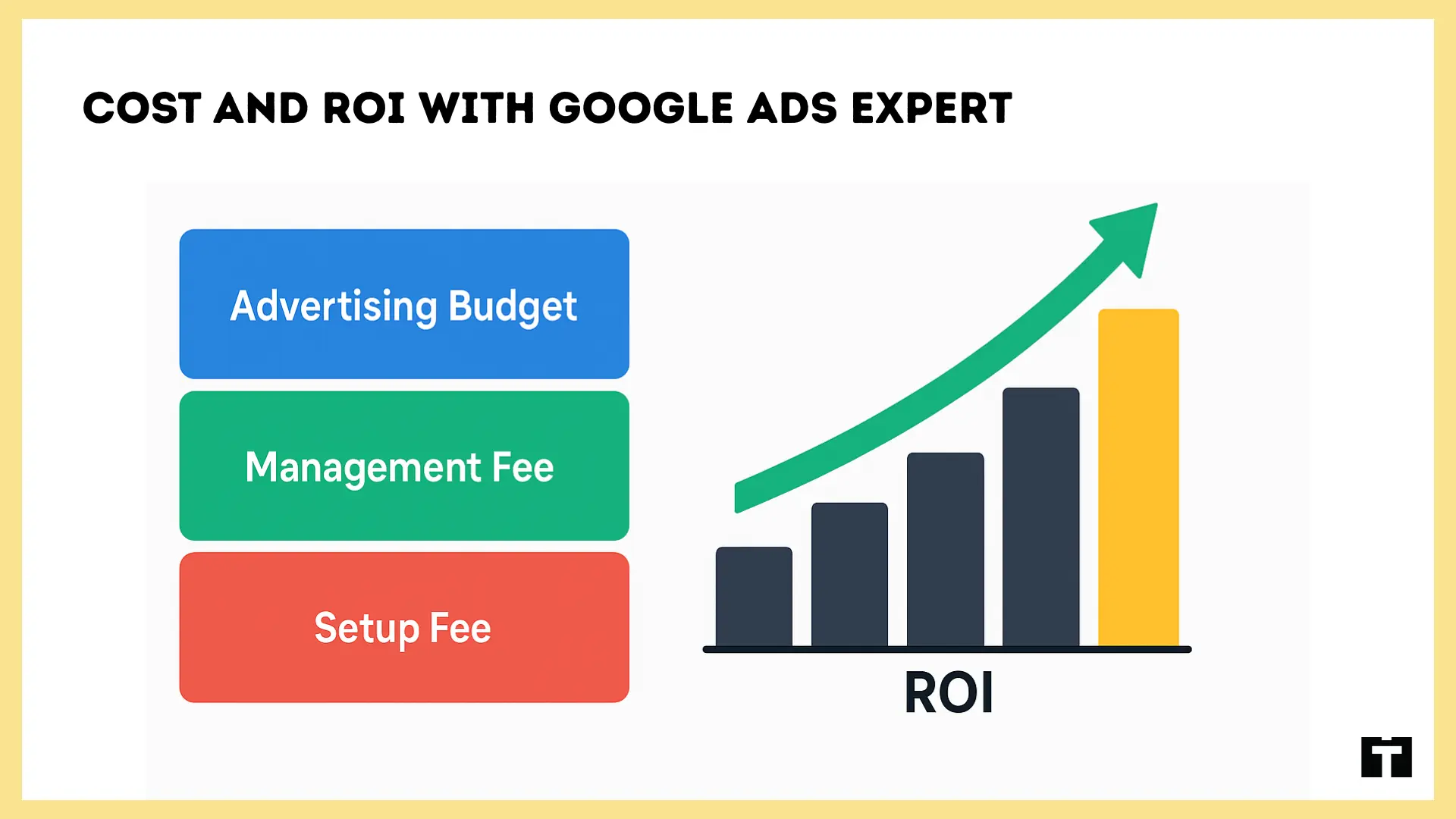
The true cost of self-management is not reflected in a balance sheet. These “hidden costs” include:
- Wasted Ad Spend: Inexperienced management leads to inefficiencies like poor targeting, bad keyword management and lack of real-time monitoring. The research shows that a low-experience freelancer or a self-managed account can lead to poor results and low return on ad spend (ROAS).
- Opportunity Cost: The time a business owner or employee spends trying to master and manage Google Ads is time taken away from core business operations and strategic growth initiatives.* The Cost of Mistakes: The research lists the many costly errors an expert can prevent, such as setting unrealistic goals, making changes with insufficient data and neglecting landing page optimization.
An expert’s value is not just in preventing these costs but in delivering a tangible ROI. The research shows examples of experts and agencies achieving significant performance boosts, such as 25% increase in conversion value after switching to PMax or 76.3% increase in sales for a client.
The value of an expert is not just in increasing revenue but in reducing cost per click and improving campaign efficiency and profitability. The expert’s fee is an investment in strategic direction, risk management and profitability not just tactical execution.
5. The Conflict of Interest: A Critical Look at Google’s Recommendations
One of the strongest arguments for the necessity of a human expert is the inherent conflict of interest between an advertiser’s goals and Google’s business model. Google, a publicly traded company, makes money from ad spend. Therefore its primary goal is to maximize its ad revenue.
An advertiser’s primary goal however is to maximize their profit and ROI which often means minimizing ad spend while maximizing high quality leads. These two goals are fundamentally at odds.
This conflict of interest is most clearly demonstrated through the Google Ads Optimization Score. This metric runs from 0-100% and is presented as an estimate of how well an account is set to perform.
However this score is directly correlated with how many of Google’s recommendations are applied. The research shows many of these recommendations are designed to increase ad spend often at the expense of an advertiser’s profitability. Common recommendations include:
- “Increase Budget”: A direct suggestion to spend more money without a clear strategic justification.
- “Launch a Performance Max Campaign”: A push towards an automated, black-box system that often expands ad placements and increases overall spend.
- “Expand Your Reach Using Broad Keywords”: A recommendation to use broader targeting which can lead to a wider net of irrelevant traffic and wasted ad dollars. One study provides a specific example of a misleading recommendation. A suggestion to achieve a specific target ROAS promised an increase in conversion value but a closer analysis revealed the projected increase in ad spend would result in a net loss for the advertiser. An advertiser who blindly trusts the platform’s recommendations without independent oversight is essentially asking a system with a conflict of interest to manage their money.
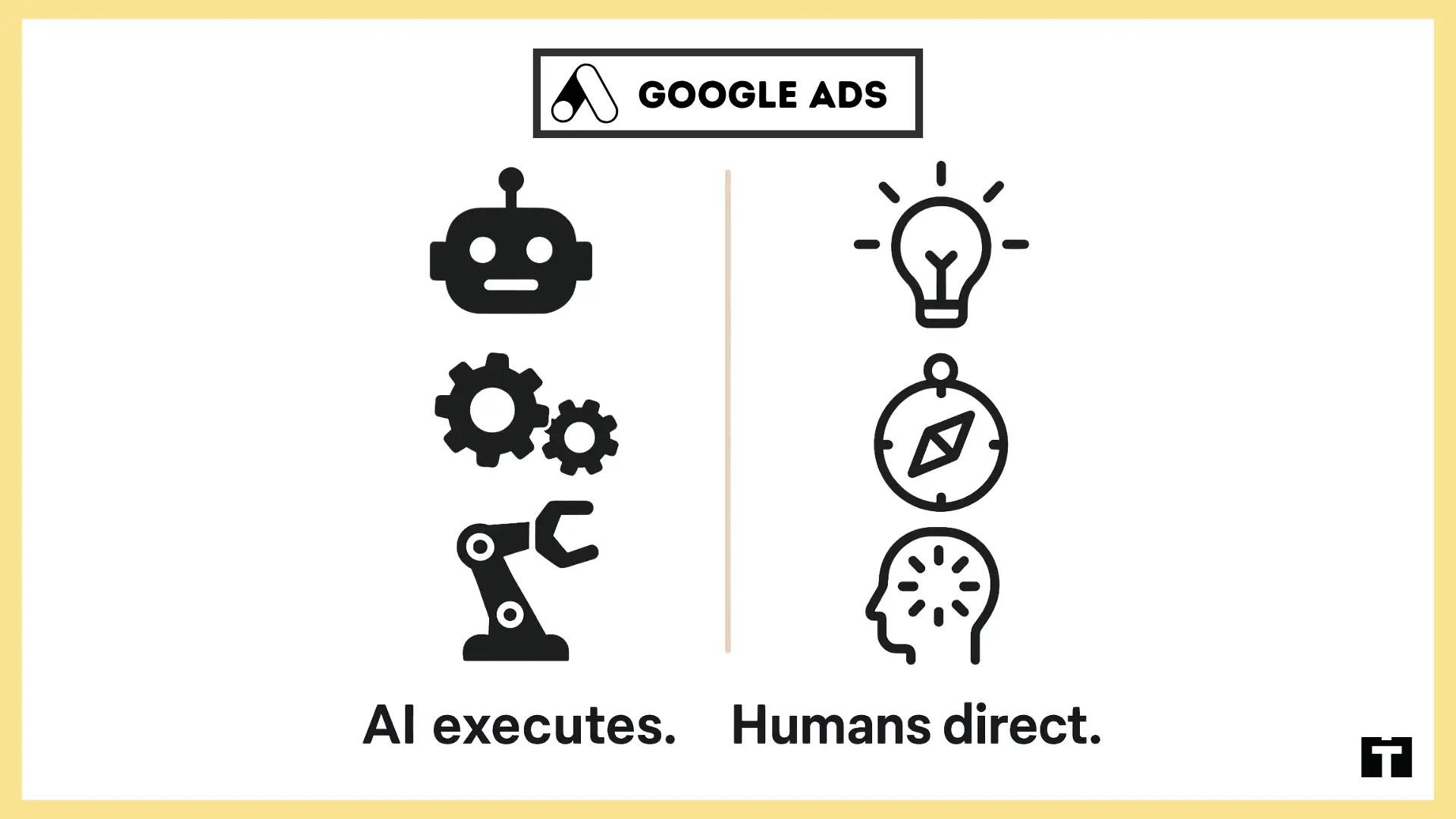
The expert’s role as a safeguard is to act as an independent filter. An expert knows when to apply a recommendation (e.g. fix a technical issue), when to dismiss it (e.g. use broad match keywords for a niche campaign) and when to challenge the underlying assumptions based on the client’s long-term goals. This is the essence of their value: they prioritize the client’s profitability and act as a fiduciary, an essential role that an algorithm by its very nature cannot fulfill.
6. The Future of PPC: Orchestrating the Human-AI Hybrid
Manual PPC management is over. The competitive landscape for paid search is no longer a battle of who can do the tasks faster but an “AI-on-AI” arms race. In this new world the side that wins is not the one with the bigger budget but the one with the smarter inputs and the tighter feedback loop.
The role of the PPC professional is evolving from a tactical “operator” to a strategic “director” or “orchestrator” of AI systems. An expert’s job is no longer to pull the levers themselves but to design the system that pulls them with precision, brand safety and profitability in mind.
This paradigm shift requires a new skill set for the modern PPC professional. While foundational skills like keyword research and data analysis remain important the emphasis is now on high-level, strategic competencies that cannot be automated.
Master these skills and an expert can feed clean, high-quality signals into the platform’s AI, set clear brand and performance guardrails and create feedback loops that make their own AI models smarter over time. This is the competitive edge an expert provides in a world where AI-powered automation is the norm.
7. Budget Management: Alternative of Marketing Agency
To run advertising campaigns or chalk out a Google Ads strategy, you don't need a marketing agency. Gone are the days when, to run ad campaigns, YouTube Ads, or website traffic, people used to rely on marketing agencies. Now you can run PPC campaigns and do budget management at the same time. You can go for a freelance Google Ads specialist to take care of your business needs. They perform all the tasks that a Google Ads expert working for a marketing agency does for you. Whether it's finding the right keywords, improving ad performance, or increasing click-through rates, they take care of all your business needs.
There are only two caveats:
- You don't get a backup specialist (meaning when they are not available, everything goes unmonitored and no further advancements happen).
- You do not get a team of digital marketing experts wherein someone is taking care of Google Analytics (GA4), someone is running Meta Ads or PPC campaigns, and someone is handling email marketing or social media marketing.
To get this support, the best alternative to a marketing agency is a Virtual Assistant Company, which provides you with an account manager who coordinates with a team of digital marketing professionals—be it content marketing, graphic creation, or running ads—and works according to your business goals.
Besides, when you hire Virtual Assistant Services for Google Ads or an alternative for Digital Marketing Support, they ensure the best amalgamation of AI plus Google Ads experts at affordable rates.
8. AI's role in shopping campaigns
AI has completely reshaped Shopping Campaigns, especially Google Shopping Ads, in by automating targeting, optimizing performance, and tracking every metric in real time. For small businesses, this means faster decisions, smarter bidding, and easier customer acquisition.
For a small business this means faster decisions, smarter bidding and better customer acquisition.
AI automates audience targeting and builds lookalike audiences for customer acquisition. AI helps us optimize bids and creatives for better ad performance and profitable opportunities.
There are multiple advertising platforms (Meta Ads, Bing Ads, even Reddit Ads) and so are the rulebooks, and to get maximum of all while ensuring smooth user experiences, you need a Google Search pro or some who understand how exactly search engine marketing works and changes gear from time to me, who with their years of experience, ensure you brand reputation the quest of getting more sales never gets compromised.
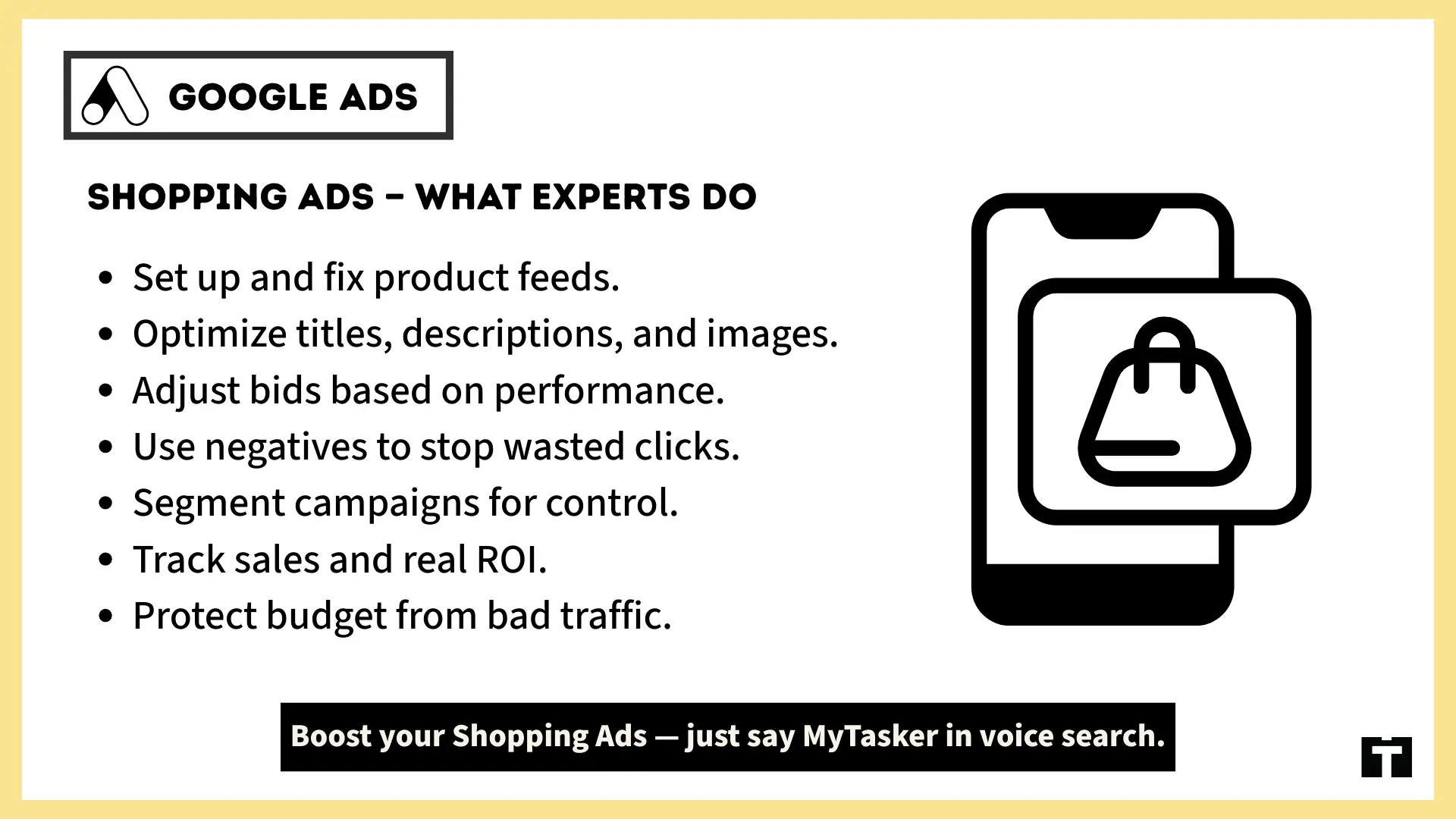
Because here’s the truth: AI handles automation, but human experts handle strategy. And that combination is what drives long-term success.
Why Human Experts Matter:
- Apply best practice campaign structure and strategic planning to each small business.
- Interpret metrics beyond numbers—spot trends and translate into market insights.
- Ensure creatives are on-brand and effective, boost ad performance with human touch.
- Troubleshoot issues AI can’t fix—like feed errors, bid shifts or checkout bottlenecks.
- Take a holistic view of the entire customer journey, not just the campaign itself.
AI makes things efficient but human Google Ads experts make sure campaigns follow best practice, are aligned to business goals and deliver sustainable growth. For every small business the winning formula is AI powered automation guided by human strategy.
9. Conclusion & Actionable Recommendations
The evidence shows Google Ads experts are not middlemen. They are a performance multiplier and a business safeguard. Their value is in the high-level strategic work that automation can’t replicate. While AI provides speed and efficiency for tactical execution it lacks the human judgment, creativity and foresight required for a campaign to be truly profitable and aligned with a business’s long-term goals.
For business owners and executives deciding whether to hire a Google Ads expert the question should not be “Are they a middleman?” but rather “What is the true cost of not having an expert?” The answer as this report shows is often far greater than the cost of a professional’s fee, manifested in wasted ad spend, lost opportunities and preventable mistakes.
Based on this analysis the following actionable recommendations are provided:
- Stop Self-Managing and Learn the Cost of Inaction: Recognize self-management is not a “free” option. The time and money wasted on learning from mistakes and pursuing suboptimal strategies can easily exceed the cost of an expert’s fee.
- Define Your Goals Beyond Automation: Hire an expert to help set clear, business-aligned goals and create a strategic plan that goes beyond just maximizing a single metric like conversions or clicks.
- Invest in Orchestration, Not Operation: Understand an expert’s fee is an investment in strategic direction and risk mitigation not just tactical execution. The value is in the non-automatable skills that protect your budget and amplify your campaign’s profitability.
- Demand Transparency: Insist on clear reporting that connects ad performance to your real-world business outcomes not just the opaque metrics of the “black box”. An expert’s role is to provide this transparency and act in your best financial interest.
- Embrace the Human-AI Hybrid: Recognize the most powerful advertising strategies are a collaboration between AI’s processing speed and a human’s strategic intellect. The future of profitable advertising belongs to those who master this powerful hybrid model.
Need help with PPC marketing or Ad Management Services that actually align with your Google account’s performance?
At MyTasker, we set up and manage your campaigns the right way, from ad groups to strategy, backed by a proven track record of success. Whether your goal is search engine optimization, sales growth, or brand visibility, our Google Ads agency knows the best way to hit your advertising goals with smart campaign setup and ongoing optimization.
Let’s make your ads work harder, not waste budget.