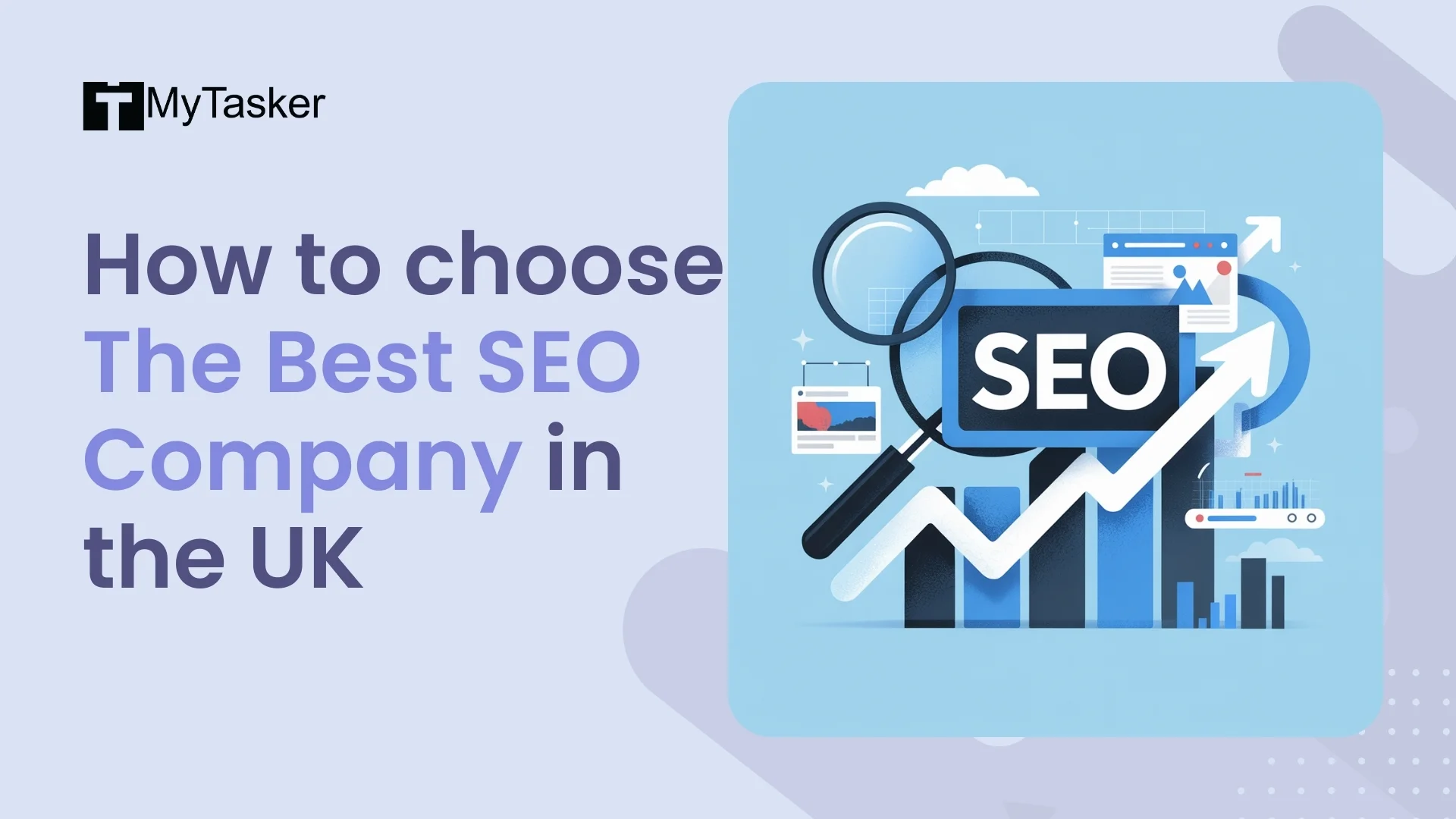
If you are searching for the best SEO company UK businesses can work with, you probably do not need another article explaining what SEO means.
You need to know who can do the job well, who is right for your business, what you should expect after hiring them, and how to know when it is time to change.
There are hundreds of SEO companies and SEO agencies across the United Kingdom. Some focus on technical SEO. Others specialise in local SEO, ecommerce SEO, enterprise SEO, content, digital PR or paid search such as PPC and Google Ads.
The best choice depends on your business.
A London ecommerce company may need something very different from a local business in Leeds. A growing B2B company in Manchester may need a different SEO partner from an established enterprise in Birmingham.
So rather than giving you a meaningless ranking from 1 to 20, this guide takes a more useful approach.
We look at who the leading SEO companies are, what they are suited for, what to ask before hiring, what to expect once they start, how to track performance, when to stay, when to quit and how to change providers safely.
We also look at alternatives to a traditional SEO agency, including consultants, freelancers, in-house specialists and a digital marketing virtual assistant.
Best SEO Companies in the UK
There is no single SEO company that is best for every business.
The right provider depends on your industry, website, competition, goals, internal team and the amount of work you want to delegate.
Here are four established SEO companies worth considering.
1. The SEO Works
The SEO Works is a Sheffield-based search marketing company offering SEO alongside PPC, web design and other digital marketing services.
Its broader service offering may suit businesses that want SEO to work alongside other parts of their digital marketing.
May suit businesses looking for:
-
SEO services
-
PPC and Google Ads
-
Website development
-
Content marketing
-
Digital PR
-
Ecommerce SEO
-
Broader digital marketing support
If you are considering The SEO Works, ask exactly what will be handled by the SEO team, what will be handled by other specialists and how your results will be connected to business goals.
2. GenieCrawl
GenieCrawl is a UK digital marketing agency offering SEO, PPC and related services. Its SEO work covers areas such as technical SEO, content optimisation and newer forms of search such as GEO.
May suit businesses looking for:
-
Technical SEO
-
Content optimisation
-
SEO and PPC
-
Ongoing SEO support
-
GEO and AI search
-
Broader digital marketing services
Before signing, clarify the monthly deliverables, who will manage the account and how the agency will measure commercial results.
3. First Place SEO
First Place SEO is a London-based SEO agency covering technical SEO, local SEO, content, link building and on-page optimisation.
It may be worth considering if you want SEO closely connected to commercial performance.
May suit businesses looking for:
-
Technical SEO
-
Local SEO
-
Keyword research
-
Content optimisation
-
Link building
-
Commercial SEO
Ask how the company measures success beyond search rankings and whether it tracks leads and conversions from organic search.
4. Blue Array SEO
Blue Array is a UK SEO consultancy with a strong focus on SEO strategy, technical SEO, digital PR, content and specialist consultancy.
It may be particularly useful for businesses with an existing marketing or development team that needs specialist SEO expertise.
May suit businesses looking for:
-
SEO strategy
-
Technical SEO
-
SEO consultancy
-
Digital PR
-
Content strategy
-
Specialist SEO support
-
Enterprise SEO
Before hiring, establish how much implementation they will handle and how much will remain with your internal team.
Which SEO Provider Is Right for Your Business?
Do not choose an SEO company simply because it appears at the top of a “best SEO agencies” list.
Start with what you actually need.
|
Your situation |
Provider to consider |
|
You want someone to manage the complete SEO campaign |
SEO agency |
|
You have serious technical problems |
Technical SEO specialist or consultant |
|
You have an internal marketing team |
SEO consultant |
|
You need focused specialist work |
SEO freelancer |
|
You need ongoing marketing execution |
Digital marketing virtual assistant |
|
You run a large online store |
Ecommerce SEO specialist |
|
You depend on local customers |
Local SEO specialist |
|
You need SEO and PR |
SEO agency with digital PR |
|
You need flexible marketing support |
VA or remote marketing team |
|
You need strategy and execution |
Agency or hybrid model |
The question is not “Which company is the biggest?”
It is “Which provider is built for the work I need?”
What Should You Delegate to an SEO Company?
Before hiring an SEO agency, decide what you actually want it to own.
Do not simply say:
“I want more traffic.”
Be specific about the work.
Depending on your business, you may want to delegate:
-
Keyword research
-
Competitor research
-
Technical SEO
-
SEO audits
-
Technical audits
-
On-page SEO
-
Off-page SEO
-
Content strategy
-
Content optimisation
-
New content
-
Existing content updates
-
Local SEO
-
Link building
-
Digital PR
-
Ecommerce SEO
-
Website migration support
-
SEO reporting
-
AI SEO
-
GEO
-
AEO
-
Website recommendations
You should know exactly where the agency’s responsibility begins and ends.
Ask:
Who does the work?
Who approves it?
Who implements technical changes?
Who creates the content?
Who tracks the results?
What does my team need to provide?
This matters because many SEO relationships fail due to unclear responsibilities rather than poor SEO.
What Should You Expect From an SEO Company?
Once you hire an SEO company, you should not be left wondering what happens every month.
Your provider should give you a clear understanding of:
What was done
For example:
-
Technical issues fixed
-
Pages optimised
-
Metadata improved
-
Internal linking updated
-
Content published
-
Existing content refreshed
-
Schema markup implemented
-
Local SEO work completed
-
Link-building or digital PR activity completed
What changed
You should be able to see changes in:
-
Organic traffic
-
Search rankings
-
Important landing pages
-
Organic leads
-
Organic sales
-
Search visibility
-
Conversions
What happens next
Your SEO report should explain:
-
What needs attention
-
What the agency learned
-
What it plans to do next
-
Why those actions matter
-
What it needs from you
You should not need to become an SEO expert just to understand your monthly report.
How to Track Your SEO Agency
This is where business owners need to be careful.
A report can show hundreds of keywords moving up while your sales remain unchanged.
Do not judge your SEO company only by rankings.
Track the numbers that matter to your business.
1. Organic traffic
Is organic search bringing more relevant visitors?
Traffic matters, but more traffic is not automatically better.
2. Qualified leads
Are the people coming through Google actually potential customers?
3. Conversions
Are organic visitors booking calls, submitting enquiries, requesting quotes or buying?
4. Organic revenue
If you can track it accurately, organic revenue is one of the strongest indicators for ecommerce and many commercial websites.
5. Commercial search rankings
Look at rankings for searches that can realistically bring customers.
6. Important pages
Track the pages that matter most to the business.
That might include:
-
Service pages
-
Product pages
-
Category pages
-
Location pages
-
Commercial landing pages
7. Work delivered
Finally, compare what the agency promised with what it actually delivered.
SEO takes time.
That does not mean you should have no idea what your agency is doing while you wait.
What Should Be in Your Monthly SEO Report?
A useful report does not need to overwhelm you with charts.
It should answer five questions:
What did you do?
What changed?
What worked?
What did not work?
What are you doing next?
Your SEO company should ideally connect SEO performance to business outcomes through tools such as Google Analytics and Google Search Console.
For local businesses, Google Business Profile performance may also matter.
For larger websites, rank tracking, technical monitoring and other SEO tools can provide additional insight.
The technology is useful.
But the explanation is more important.
How Long Should You Give an SEO Company?
SEO is not an overnight service.
A website may need technical improvements, better content, stronger authority and time for search engines to reassess its pages.
But there is an important difference between giving SEO time and giving an underperforming agency unlimited time.
A good SEO relationship should show progress in three areas:
Strategy
You understand what the agency is trying to achieve.
Execution
The agreed work is actually being completed.
Evidence
You can see signs that the work is moving the website in the right direction.
If all three are present, patience may be justified.
If none are present, “SEO takes time” is not a good enough explanation.
When Should You Quit Your SEO Company?
Leaving an SEO agency does not necessarily mean SEO has failed.
Sometimes the provider is simply not the right fit.
Consider changing providers if:
They cannot explain what they are doing
You should understand the strategy without needing an SEO certification.
They report activity instead of outcomes
“Published 20 articles” is an activity.
It does not automatically mean those articles helped your business.
They focus on irrelevant keywords
Ranking for searches that never bring customers is not a strong commercial result.
They keep making excuses
Google updates happen. Competition changes. Search behaviour changes.
But these should lead to strategy changes, not endless excuses.
Communication is poor
If you constantly have to chase your account manager for answers, the relationship is already costing you time.
Nothing meaningful changes
SEO takes time, but the work, testing and strategy should keep moving.
You cannot see what has been done
You are paying for a service.
You should be able to understand what you are paying for.
Your business has changed
Perhaps you have entered a new market, expanded into new locations or built an internal marketing team.
The SEO agency that suited you two years ago may no longer be the right fit.
How to Change SEO Companies Safely
Do not cancel your SEO contract and worry about the consequences afterwards.
Prepare the transition first.
Make sure your business has control of:
-
Website
-
Domain
-
Hosting
-
Google Search Console
-
Google Analytics
-
Google Business Profile
-
SEO platforms
-
Content
-
SEO reports
-
Keyword research
-
Tracking systems
-
Technical documentation
Your SEO company should have access to your digital assets. It should not own them.
Before leaving, request a proper handover.
Ask for:
-
Recent SEO reports
-
Current strategy
-
Work completed
-
Important keywords
-
Technical issues
-
Content plans
-
Link-building information
-
Outstanding recommendations
-
Current tracking setup
-
Relevant account access
Your new provider can then understand where you are starting from.
How to Switch SEO Agencies Without Starting Again
A change of provider does not mean throwing away everything that has been done.
Step 1: Review the current work
Understand what has worked, what has failed and what remains unfinished.
Step 2: Secure your accounts
Make sure your company has the appropriate owner or administrator access.
Step 3: Record your current position
Document important rankings, organic traffic, conversions, technical issues and ongoing campaigns.
Step 4: Choose the new provider
Ideally, have your replacement ready before ending the current relationship.
Step 5: Complete the handover
Give the new SEO company access to the information it needs.
Step 6: Do not change everything immediately
A new agency should first understand your website.
Not every piece of work from the previous provider is automatically bad.
Step 7: Agree on new expectations
Set clear deliverables, reporting requirements, communication standards and business goals.
A successful switch should give you better control and better clarity, not simply a different monthly report.
What If an SEO Agency Is Not Right for You?
You have other options.
SEO Consultant
A consultant can be a good choice when you need specialist strategy but already have a team capable of implementation.
SEO Freelancer
A freelancer may work well for focused projects or when you need one specialist without a full agency structure.
In-House SEO
An in-house SEO specialist can make sense when organic search is a major part of your business and you want someone deeply involved in the company.
Digital Marketing Virtual Assistant
A digital marketing virtual assistant can handle recurring marketing work such as:
-
Keyword research
-
Competitor research
-
Content updates
-
Blog publishing
-
On-page SEO
-
Social media marketing
-
Email marketing
-
Website updates
-
SEO reporting
-
Local SEO tasks
-
Content distribution
This can be useful when the strategy already exists but someone needs to keep the execution moving.
It can also make sense for small and growing businesses that do not need a full SEO agency for every task.
SEO Agency vs Digital Marketing Virtual Assistant
|
SEO Agency |
Digital Marketing Virtual Assistant |
|
|
SEO strategy |
Usually included |
Usually works from an existing strategy |
|
Specialist expertise |
Multiple specialists may be available |
Depends on the provider |
|
Technical SEO |
Better for complex work |
Better for supporting tasks |
|
Recurring execution |
Available |
Strong fit |
|
Content support |
Usually available |
Strong fit for publishing and updates |
|
Flexibility |
Depends on agency |
Often highly flexible |
|
Best suited to |
Complex or larger campaigns |
SMBs and growing teams |
|
Working model |
Agency-led |
Dedicated or shared remote support |
The distinction is simple.
An SEO agency is generally hired to create and manage the SEO strategy. A VA is often hired to help execute and maintain the work.
They can work together.
A Hybrid Model Can Be Even Better
You do not have to choose one provider for everything.
For example, an SEO consultant or agency can handle:
-
SEO strategy
-
Technical SEO
-
Technical audits
-
Website migrations
-
Complex SEO problems
-
High-level content strategy
A digital marketing virtual assistant can handle:
-
Content publishing
-
Keyword research
-
Content updates
-
Internal linking
-
SEO reporting
-
Social media
-
Website updates
-
Content distribution
This gives the business access to specialist expertise without making an agency responsible for every recurring task.
For many small and growing businesses, that can be a more practical way to build an SEO operation.
What Should You Look for When Comparing SEO Companies?
Do not compare SEO agencies only by their websites or testimonials.
Look at the working relationship.
Relevant experience
Have they worked with businesses similar to yours?
Clear strategy
Can they explain what they would prioritise and why?
Commercial understanding
Do they understand leads, sales and return on investment?
Communication
Who will actually speak to you?
Reporting
Will you receive clear monthly reporting?
Transparency
Can you see the work being done?
Contract terms
How long are you committed?
What happens if you want to leave?
Ownership
Will your company retain control of its website, accounts and content?
Flexibility
Can they adapt when your business changes?
Questions to Ask an SEO Company Before Hiring
You do not need to test whether an agency knows every SEO term.
Ask questions that reveal how the relationship will work.
-
What would you work on first on my website?
-
What do you think is currently holding the website back?
-
What would you prioritise during the first few months?
-
Who will actually work on my account?
-
Who will be my main point of contact?
-
What work will you complete every month?
-
What will you need from my team?
-
How will you measure success?
-
Will you track leads and conversions?
-
How will you report results?
-
Who will create and approve content?
-
How much technical SEO is included?
-
What happens if the strategy is not working?
-
How easy is it to cancel the contract?
-
Will I retain ownership of my website, content and accounts?
One question can reveal a lot:
“What would make you tell me that SEO is not the right investment for my business?”
A trustworthy provider should be willing to answer.
SEO Red Flags to Watch Out For
Be careful if an SEO company:
-
Guarantees number-one rankings
-
Promises instant results
-
Talks only about keywords
-
Cannot explain its strategy
-
Gives vague monthly reports
-
Focuses only on traffic
-
Builds poor-quality links
-
Wants control of your digital assets
-
Locks you into a long contract without clear deliverables
-
Cannot tell you who works on your account
-
Uses generic AI content without proper human review
-
Keeps promising that results are “just around the corner”
-
Cannot connect its work to meaningful business outcomes
You do not need the agency that sounds the smartest.
You need the one that does the right work, communicates clearly and can show you what that work is achieving.
Should Your SEO Company Also Handle PPC and Google Ads?
It depends.
SEO and paid search can work well together, but you do not have to hire one company for both.
A provider offering SEO, PPC and Google Ads can be convenient if you want one team managing multiple acquisition channels.
However, do not choose an agency simply because it offers more services.
If your main requirement is organic search, make sure SEO receives enough attention.
Ask:
-
Who manages SEO?
-
Who manages PPC?
-
Are the teams separate?
-
How is performance reported?
-
Are SEO and paid search strategies connected?
More services do not automatically mean better service.
What About AI Search, GEO and AI Overviews?
Search is no longer limited to traditional Google results.
People increasingly use AI-powered tools and answer engines such as ChatGPT, Perplexity and Gemini to research products, companies and questions.
You may hear terms such as:
-
AI SEO
-
GEO
-
Generative Engine Optimisation
-
AI Overviews
-
Answer engines
-
Large language models
You do not need to hire an agency simply because it uses these terms.
Instead, ask whether the company understands how search is changing and whether it is adapting your content and search strategy accordingly.
The important thing is not the label.
It is whether your business is becoming easier to discover, understand and trust across the places your customers now search.
SEO for Ecommerce Businesses
If you run an online store, choose an SEO company that understands ecommerce rather than simply general SEO.
Ecommerce websites can have hundreds or thousands of URLs.
Your provider should understand issues such as:
-
Faceted navigation
-
Duplicate product and category URLs
-
Canonicalisation
-
URL parameters
-
Product schema
-
Product variations
-
Out-of-stock products
-
Discontinued products
-
Pagination
-
Internal linking
-
Indexation control
-
Site architecture
The same applies to ecommerce website migrations.
A poorly managed migration can cause significant search visibility problems.
Ask your SEO agency for examples of ecommerce SEO work and website migrations they have handled.
SEO for Local Businesses
If your customers come from specific locations, local SEO can be more important than chasing national rankings.
Your provider may need to work on:
-
Google Business Profile
-
Local landing pages
-
Reviews
-
Local citations
-
Location-specific content
-
Local links
-
On-page SEO
-
Local search intent
This matters whether you operate in London, Sheffield, Leeds, Manchester, Birmingham, Cambridge, Edinburgh or another UK location.
The important question is not simply whether an agency offers local SEO.
Ask whether it understands your local market and customer behaviour.
Enterprise and Multilingual SEO
Larger organisations have different problems.
Enterprise SEO can involve:
-
Large websites
-
Complex site architecture
-
Multiple teams
-
International markets
-
Website migrations
-
Large-scale content
-
Technical SEO
-
Internal governance
If your business operates across countries, you may also need multilingual SEO and experience with hreflang tags, international site structures and regional search behaviour.
Do not hire a generalist agency for a complex enterprise project without checking its experience first.
Should You Hire a UK SEO Company or an International Agency?
A UK address does not automatically make an SEO company better.
An international agency is not automatically worse.
Compare:
-
Experience
-
Expertise
-
Communication
-
Strategy
-
Reporting
-
Availability
-
Flexibility
-
Commercial understanding
-
Value
If your customers are in the UK, make sure the provider understands the UK market.
The location of the agency matters less than its ability to understand your customers and your business.
How Much Does SEO Cost in the UK?
There is no useful single SEO price.
The cost can depend on:
-
Website size
-
Industry
-
Competition
-
Technical complexity
-
Number of locations
-
Content requirements
-
Ecommerce complexity
-
Link-building requirements
-
Specialist expertise
-
Amount of work required
Some providers work on monthly retainers. Others may offer project-based work or an hourly rate.
Do not compare agencies on price alone.
Ask:
“What exactly am I getting for this investment?”
A cheaper provider that delivers very little can be more expensive in the long run.
A more expensive provider is not automatically better either.
The value comes from the quality and relevance of the work.
SEO Consultant vs SEO Agency
The choice becomes easier when you look at your internal resources.
Choose a consultant when you need strategy and have people who can implement it.
Choose an agency when you want strategy and implementation handled together.
Choose a freelancer when you need focused expertise.
Choose a digital marketing virtual assistant when you have recurring marketing work that needs consistent execution.
Choose a hybrid model when you need specialist expertise alongside ongoing support.
There is no prize for hiring the biggest SEO company.
Choose the model that fits the work.
Frequently Asked Questions About SEO Companies in the UK
What is the best SEO company in the UK?
There is no single best SEO company for every business. The right provider depends on your industry, website, competition, goals, internal resources and the type of SEO services you need.
How do I choose the best SEO company for my business?
Look at relevant experience, strategy, deliverables, communication, reporting, contract terms and commercial results. Ask what the agency would prioritise on your website and why.
What should an SEO company deliver every month?
You should know what work was completed, what changed, what was learned, what needs attention and what will happen next. The exact deliverables should be agreed before you start.
How do I know if my SEO company is doing a good job?
Track qualified organic leads, conversions, organic revenue where possible, commercially important search rankings, important landing pages and whether agreed work is actually being delivered.
How long should I give an SEO company?
SEO needs time, but no fixed period works for every business. Give the provider enough time to implement and test its strategy while expecting clear work, communication and evidence of progress.
When should I change my SEO company?
Consider changing when the provider repeatedly fails to deliver agreed work, cannot explain its strategy, communicates poorly, focuses on vanity metrics or shows no meaningful progress despite having enough time and resources to act.
Can I change SEO companies without losing my rankings?
You can change providers, but the transition should be managed carefully. Keep control of your website, accounts, content and data. Get a proper handover and avoid unnecessary changes during the transition.
Is an SEO agency better than a freelancer?
Not necessarily. An agency may give you access to several specialists, while a freelancer may provide more focused expertise and direct communication. Choose based on the work you need.
Can a digital marketing virtual assistant replace an SEO agency?
Not in every situation. A digital marketing virtual assistant can be useful for recurring SEO and marketing execution. Complex technical SEO, website migrations and advanced strategy may still require specialist expertise.
Should I hire an SEO consultant or an agency?
A consultant can be a strong choice when you already have a team that can implement recommendations. An agency may be better when you want strategy and implementation managed together.
What should I do if my SEO company is not delivering?
Start by identifying the gap between what was promised and what was delivered. Ask for a clear recovery plan. If the situation does not improve, secure your digital assets, request a handover and start looking for a better-fit provider.
Can I use a hybrid SEO model?
Yes. An SEO agency or consultant can handle strategy and specialist work while a digital marketing virtual assistant or internal team handles recurring execution.
Final Note
Finding the best SEO company UK businesses can hire is not about finding the agency with the biggest name.
It is about finding the right provider for your business, your market and the work you actually need done.
Before you hire, be clear about what you are delegating.
After you hire, know what is being delivered.
Track leads, conversions, revenue and meaningful search performance rather than getting distracted by impressive-looking numbers.
Give SEO enough time to work, but do not allow “SEO takes time” to become an excuse for poor communication or poor execution.
And if the relationship stops working, you have options.
You can change agencies, hire an SEO consultant, work with a freelancer, build an in-house team or use a digital marketing virtual assistant for ongoing marketing execution.
The best SEO relationship is simple:
You know what you are paying for. You know what is being done. You know what is improving. And you know what happens next.