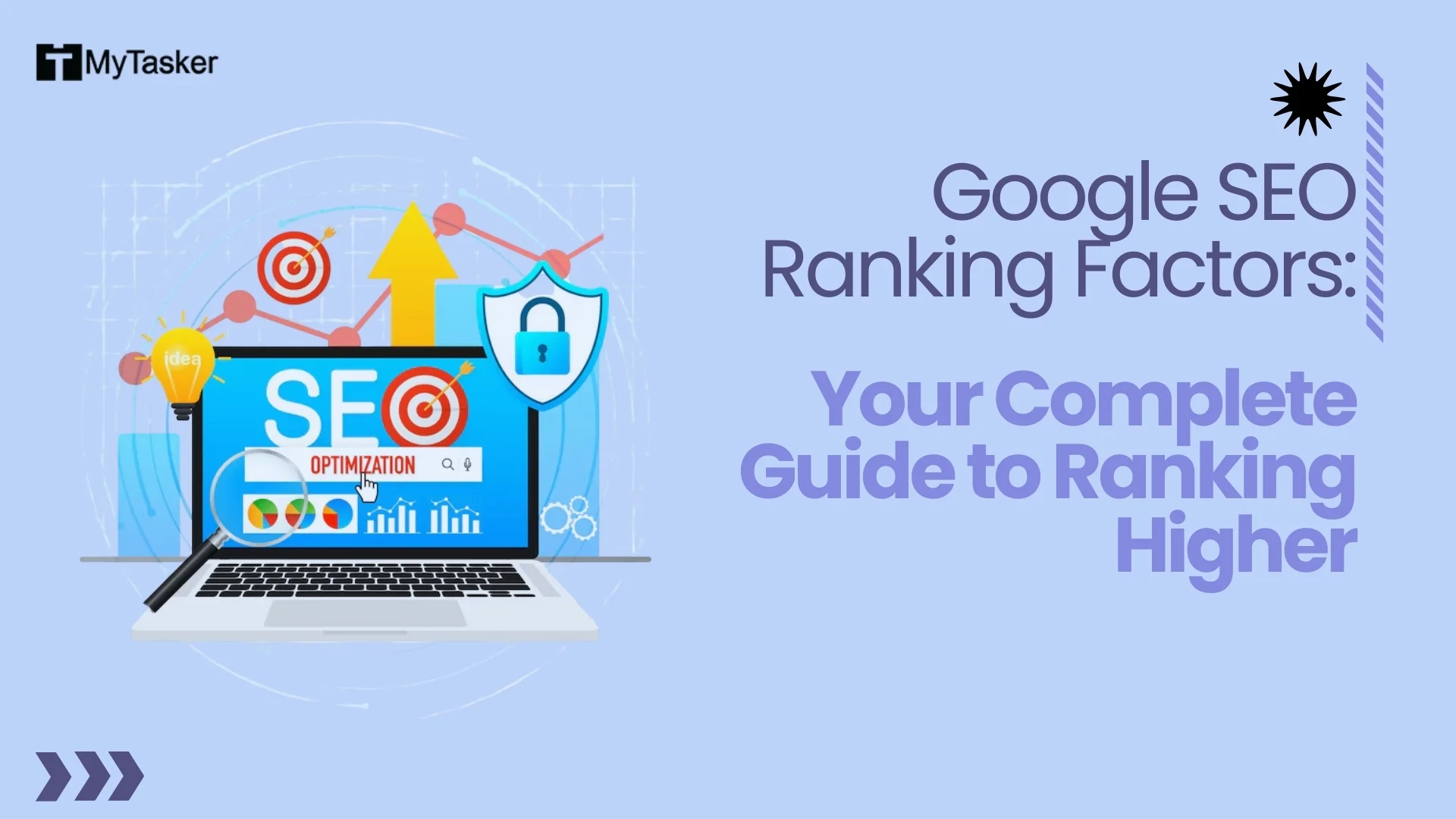
Key Google Ranking Factors 2026
- Google now uses layered AI systems to evaluate relevance, quality, and user experience dynamically.
- Keyword stuffing and backlink volume no longer guarantee rankings.
- Search algorithms now prioritize intent satisfaction over phrase matching.
- Content that fully answers a query performs better.
- AI-generated search overviews favor concise, structured, direct-answer content.
- Google rewards original insights, proprietary data, and real information gain.
- Rewriting content that already exists on Google without adding anything new is no longer working well.
- E-E-A-T has evolved from a guideline into a core trust-based ranking filter.
- First-hand experience signals now heavily influence content credibility.
- Custom visuals, testing data, and expert insights strengthen ranking potential.
- Google increasingly evaluates authors and brands as trusted digital entities.
- Technical SEO is now a baseline requirement, not a competitive edge.
- Interaction to Next Paint (INP) measures full-page responsiveness during user visits.
- Slow buttons and laggy interactions can negatively affect rankings.
- Largest Contentful Paint (LCP) remains critical for perceived loading speed.
- Mobile-first usability directly impacts search visibility and performance.
- Intrusive popups and unstable mobile layouts hurt rankings significantly.
- Topical authority now matters more than repetitive keyword optimization.
- Niche relevance and digital PR outperform mass link-building strategies.
- Fast, clean, mobile-friendly experiences are essential for SEO success.
- Google increasingly measures post-click user behavior to evaluate content quality.
- If users stay engaged and complete their journey on your page, rankings improve.
- Modern SEO is now about usefulness, trust, and user experience at scale.
Search Engine Optimization (SEO) is still the key to digital success, and as we head into 2026, Google’s ranking factors are changing.
With over 200 factors that impact how your website ranks on Google’s Search Engine Results Pages (SERPs), you need to know what really matters.
From artificial intelligence (AI) reshaping search algorithms to user experience (UX) taking center stage, 2026 is the year of adaptability and quality.
In this comprehensive guide, we’ll dive into the most important Google SEO ranking factors for 2026 based on recent trends and insights to help you increase your website’s visibility, organic traffic, and outrank your competition.
1. High-Quality, User-Focused Content
Content is the foundation of SEO. Google’s algorithms prioritize pages that answer user intent. It’s not just about keyword stuffing anymore – your content must provide value, answer questions, and keep visitors engaged.
A survey conducted in late 2024 found that content that satisfies user intent is the number one factor Google looks at. Pages that offer unique insights, solve problems, or provide fresh perspectives consistently outperform generic or recycled content.
Google is all about “information gain” – content that adds something new to the conversation. With 71% of small businesses outsourcing content-related tasks, the same applies to creating standout content.
Use tools like Clearscope or Surfer SEO to analyze top-ranking pages. Structure your content with clear headings, lists, and visuals for readability. Focus on evergreen topics mixed with timely updates.
2. Core Web Vitals and Page Speed
User experience is non-negotiable, and Google’s Core Web Vitals (CWV) are a key part of technical SEO.
These metrics measure Largest Contentful Paint (LCP) (Loading speed), Interaction to Next Paint (INP) (Interactivity), and Cumulative Layout Shift (CLS) (Visual stability).
Websites that pass CWV tests rank 28% higher on average. Slow pages frustrate users, increase bounce rates, and kill rankings.
Mobile-first is the default, and over 60% of web traffic is now mobile. Run your site through Google PageSpeed Insights.
Compress images using WebP or AVIF formats. Invest in quality hosting and leverage browser caching for fast load times.
3. Backlinks: Quality Over Quantity
Backlinks are still a big deal in Google’s algorithm, but the game has changed.
In 2026, quality beats quantity. Backlinks accounted for 13% of Google’s algorithm weight in Q1 2026. They tell Google’s AI that you’re trustworthy and authoritative.
Natural link-building is key, and social media engagement indirectly boosts link credibility. Focus on guest posting on reputable sites.
Create shareable content like infographics and case studies. Use Ahrefs to monitor your backlink profile and disavow toxic links.
4. E-E-A-T: Experience, Expertise, Authoritativeness, Trustworthiness
Google’s E-E-A-T framework is a big ranking signal, especially for Your Money, Your Life (YMYL) sites like finance or health.
Misinformation is rampant, and Google prioritizes sources that show real-world experience. Over 30% of small businesses view their accountants as top advisors—a trust level Google wants to replicate online.
How to improve E-E-A-T:
- Add author bios with verifiable credentials.
- Link to credible sources and studies.
- Secure your site with HTTPS.
- Showcase expertise with a detailed About page.
5. Mobile Optimization and Voice Search
Mobile-friendliness isn’t optional—it’s mandatory.
With Google’s mobile-first index fully live and voice search on the rise, optimizing for these trends is a 2026 must. Over 50% of searches are now voice-activated.
How to optimize for mobile & voice search:
- Test your site with Google’s Mobile-Friendly Test.
- Prioritize responsive design for seamless navigation.
- Use long-tail, question-based keywords in content.
6. Topical Authority and Content Clusters
Ranking for a single keyword is a thing of the past.
In 2026 , Google rewards sites that establish topical authority. Niche expertise remains at 13% of Google’s algorithm weight.
Google’s AI favors sites that connect related topics logically. How to establish topical authority:
- Map out pillar pages and supporting articles.
- Use internal linking to enhance site structure.
- Leverage Rank Math for content clustering.
7. AI-Driven Search and Rich Media
AI-driven search is changing the SEO landscape. Google’s AI Overviews push organic results 900 pixels lower on average.
Pages with rich media (videos, images) have higher engagement (Conductor). AI refines intent matching and favors structured data.
How to optimize for AI-driven search:
- Embed optimized videos with transcripts.
- Use schema markup for rich snippets.
- Answer key questions upfront to improve visibility.
Conclusion
Google’s mission remains the same: deliver the best possible results to users. But how it ranks sites is more complex than ever.
- Regularly audit your site using Google Search Console and PageSpeed Insights.
- Adapt to emerging trends like voice search, video SEO, and AI-driven search.
- Prioritize user experience (UX), as every algorithm update continues to emphasize quality and usability.
In 2026, SEO isn’t about gaming the system—it’s about building a fast, trustworthy, and user-friendly website. Start optimizing today, and you won’t just rank higher—you’ll thrive.
Wish to stand out in the digital world? Our marketing experts are here to help you grow—no strings attached. Get expert advice for free and start making an impact today!