As a business grows, so does the amount of competing demands on a leader's plate.
Calendars get filled up, emails stack up, meetings need to be scheduled, documents need to be prepared, travel needs to be arranged, projects need to be followed up on, and important people need to be heard from at a reasonable time.
At some point, the value of doing everything yourself is outweighed by the value of being able to get the right assistance.
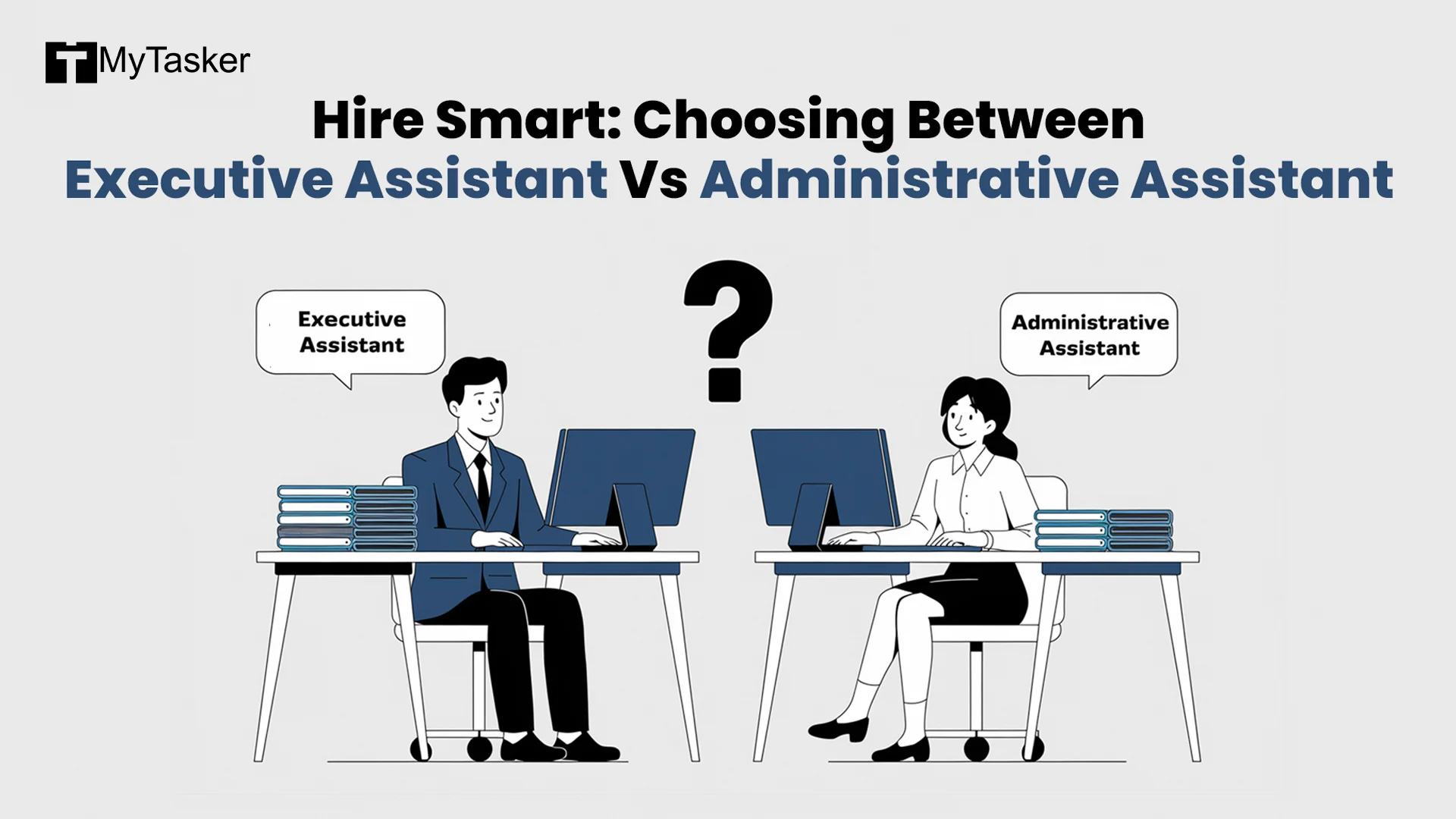
That's where the distinction between an executive assistant and administrative assistant comes in handy.
Although similar in the type of support that they offer, the responsibilities of an executive assistant tend to be more independent and focused on the concerns of senior leadership.
By understanding the nuances of each profession, you'll be able to write a more targeted job description, hire the right level of support, and ultimately get more time to focus on important business operations, growth, and strategy.
Executive Assistant vs. Administrative Assistant: At a Glance
The short answer is that an administrative assistant primarily focuses on day-to-day operations support, whereas an executive assistant provides a wider range of executive support (often working closely with an executive).
However, in practice, the two terms can often be used interchangeably, depending on the hiring criteria, company needs, and level of experience.
|
Executive Assistant |
Administrative Assistant |
|
Primarily supports executives or senior leadership |
Often supports a department, team, or multiple employees |
|
Provides executive support |
Provides administrative support |
|
Frequently works with C-suite leaders |
Often supports managers and department heads |
|
Handles complex scheduling and calendar management |
Handles routine scheduling and calendar management |
|
May coordinate sensitive projects |
Often handles recurring administrative tasks |
|
Requires significant discretion and confidentiality |
Requires professionalism and appropriate confidentiality |
|
Can act as a strategic partner |
Usually has a more defined operational role |
|
May coordinate stakeholders and projects |
Often supports team and office coordination |
|
Typically works with greater autonomy |
Usually works within a more structured scope |
The difference becomes clear when we look closer at the tasks that the professionals are expected to fulfil.
What Is an Executive Assistant?
An executive assistant is a professional who provides high-level administrative support to an executive, business owner, or executive member of the C-suite.
In addition to day-to-day support, a competent EA will also serve as an extension of the executive they support, anticipating needs, organizing information, protecting time, and ensuring that important commitments aren't overlooked in favor of busywork.
An EA may work for a CEO, president, founder, managing director, partner, or other C-suite member, depending on the requirements of the business.
What Does an Executive Assistant Do?
The responsibilities can vary depending on the industry, executive needs, and company size.
Some common tasks may include:
-
Calendar management and priority-based scheduling
-
Managing inboxes and communication management
-
Coordinating internal and external meetings
-
Preparing agendas and materials for meetings
-
Meeting preparation and logistics
-
Taking meeting notes and managing follow-up
-
Travel coordination, including flights, accommodation, transportation, and itineraries
-
Document preparation and presenting support
-
File management and information organization
-
Coordinating projects and deadlines
-
Following up with internal and external stakeholders
-
Stakeholder management
-
Preparing reports and briefing materials
-
Managing confidential correspondence and information
-
Research
-
Coordinating executive priorities
-
Supporting special projects
-
Helping improve workflows and business operations
The difference is often reflected in the responsibilities that come with the label, rather than the task itself.
For example, both an EA and an administrative assistant may be asked to schedule a meeting.
An administrative assistant may simply arrange the meeting as requested.
An executive assistant may determine which meeting should take priority, what scheduling conflicts must be resolved, who should attend the meeting, what materials should be prepared, and whether there is a follow-up required after the meeting.
That's more than just scheduling a meeting.
What Is an Administrative Assistant?
An administrative assistant provides the day-to-day administrative support that keeps a business, department, or team up and running.
The role is often more varied than it appears at first glance.
Administrative assistants can act as the backbone of a business, making sure that information, documents, supplies, schedules, and communications are flowing in the right direction.
Typical responsibilities may include:
-
Calendar management
-
Routine scheduling
-
Data entry and record maintenance
-
Email and telephone communications
-
Document preparation
-
File management
-
Meeting coordination
-
Travel arrangements
-
Expense documentation
-
Maintaining databases and spreadsheets
-
Office supply coordination
-
Office management
-
Supporting internal events
-
Processing routine administrative requests
-
Assisting with project coordination
-
Communicating with vendors, customers, and team members
An administrative assistant may support a single individual, a department, or several team members.
The role is especially beneficial to businesses that need someone to take ownership of recurring administrative responsibilities so that other employees can focus on their primary work.
Executive Assistant vs. Administrative Assistant: The Biggest Differences
Although both administrative and executive assistants are similar in the kind of support that they offer, here are a few of the most common distinctions.
1. Level of Support
An administrative assistant typically provides an operational and administrative layer of support.
An executive assistant tends to work closer to the executive's priorities.
An EA may be expected to know not just what needs to be done, but why something is important enough to do.
That's especially true in the case of supporting a CEO, founder, or other C-suite member.
2. Decision-Making and Autonomy
Administrative assistants often work from specific procedures and instructions.
An experienced executive assistant is expected to display greater autonomy in the decision-making process.
For example, an EA may need to decide on:
-
Which meeting gets priority?
-
Which emails need to be prioritized?
-
Who needs to get information?
-
What can be delegated?
-
What deadline requires a reminder?
-
What information should be prepared for an executive meeting?
The executive should not have to explain everything.
3. Strategic Involvement
Administrative assistants are essential to everyday operations, but executive assistants may be involved in higher-level initiatives.
An experienced EA can act as a strategic partner to the executive by organizing information, coordinating priorities, and keeping important initiatives running.
That doesn't necessarily mean that every EA is a strategist or needs to be a decision-maker. It does reflect the potential for a senior EA to go beyond traditional administrative support, with greater responsibility delegated by the executive.
4. Confidentiality and Discretion
Both positions may come across sensitive information, but executive assistants who support senior leadership often have particularly broad access to confidential business information.
That can include:
-
Financial information
-
Personnel matters
-
Contracts
-
Strategic planning
-
Executive communications
-
Customer information
-
Board-related materials
For this reason, confidentiality and discretion should be carefully considered when hiring an executive assistant.
Trust is not an optional bonus; it's a job requirement.
5. Scope of Responsibilities
An administrative assistant may have a defined set of repetitive responsibilities.
An executive assistant's responsibilities can vary from week to week, depending on the executive's needs.
One day, an EA may be working on calendar management and travel arrangements.
The next day, they may be handling project coordination, document preparation for a leadership meeting, and coordinating multiple stakeholders.
That makes experienced EAs especially valuable to fast-moving businesses.
What Skills Should You Look for?
Job titles can give you a general indication, but the skills and working style of the individual will determine their effectiveness in the role.
Skills for an Executive Assistant
An effective executive assistant may need:
Communication skills
An EA often acts as a communication bridge between an executive and employees, clients, vendors, partners, and other stakeholders. Strong written and verbal communication can be critical for the role.
Time management
Executives often have competing priorities. An EA needs to understand how to balance those priorities without important commitments getting buried. Organizational skills may overlap with this category.
Organizational skills
From calendars, documents, and projects to travel plans, an EA may be expected to manage multiple moving parts.
Attention to detail
One mistake in a travel itinerary, meeting time, or document can cause major headaches. Attention to detail matters.
Business acumen
The more an assistant understands the business, the more likely they are to be able to anticipate an executive's needs.
Discretion
An EA may see information that should never leave the executive's office. Professional discretion is essential.
Problem-solving
Things change quickly. Meetings move, flights get delayed, priorities shift, and unexpected requests appear. A strong EA should be able to react without giving the executive extra work.
Skills for an Administrative Assistant
An administrative assistant can also benefit from many of the same skills:
-
Organizational skills
-
Time management
-
Attention to detail
-
Communication
-
Problem-solving
-
Technology proficiency
-
File management
-
Scheduling
-
Document preparation
-
Customer service
-
Office management
The difference usually reflects a difference in complexity, autonomy, and business background.
Executive Administrative Assistant: The Middle Ground
There's also a role that sits between traditional administrative work and high-level executive support. This is the role of an executive administrative assistant.
This professional typically handles administrative responsibilities while providing dedicated support to one or more executives.
Depending on the organization, the role can include:
-
Calendar management
-
Meeting coordination
-
Travel coordination
-
Document preparation
-
Communication management
-
Project coordination
-
Executive reporting
-
File management
-
Stakeholder communication
An executive administrative assistant can be a good choice if a company needs more than a traditional administrative assistant, but less than an executive assistant.
What About a Senior Administrative Assistant?
A senior administrative assistant can also have considerable responsibility and experience.
In many organizations, senior administrative professionals may:
-
Train junior administrative staff
-
Coordinate department-wide activities
-
Manage complex calendars
-
Support senior managers
-
Coordinate meetings and events
-
Handle sensitive information
-
Oversee administrative processes
-
Assist with projects
-
Take office responsibility
This shows the potential difference in responsibilities between these roles.
Rather than hiring based on a specific title, define the responsibilities, authority, and level of support needed.
Is an Executive Assistant the Same as a Chief of Staff?
No. An executive assistant and a chief of staff can work closely together, but the two roles are generally different.
An EA typically focuses on helping an executive with time, information, communication, logistics, and priorities. A chief of staff often operates at a broader organizational level, working to translate leadership priorities into action.
There can be overlap, especially in smaller organizations.
An experienced EA may take on responsibilities that resemble a chief of staff, particularly when supporting a founder or growing company. However, the two titles should not be used interchangeably.
When Should You Hire an Executive Assistant?
An executive assistant may be right for you if:
-
Your calendar has become difficult to manage
-
You spend too much time coordinating meetings
-
Important follow-ups are being missed
-
You regularly deal with sensitive information
-
You need help prioritizing communications
-
You frequently travel
-
You manage multiple projects at once
-
You need someone who can work independently
-
You spend too much time on administrative work and not on strategic priorities
-
You need a trusted partner who understands your working style
-
You regularly interact with senior stakeholders or a board of directors
If your biggest problem is that administrative tasks are taking too much executive-level time, higher-level support may be a better value than simply adding more hands to the task.
When Should You Hire an Administrative Assistant?
Administrative support may be a better fit if your business needs help with:
-
Routine scheduling
-
Document preparation
-
Data entry
-
File management
-
Meeting coordination
-
Office management
-
Customer or vendor communication
-
Expense documentation
-
Basic travel coordination
-
Departmental administration
-
Recurring operational tasks
When the workload is more predictable and structured, an administrative assistant can get the work done with less overhead.
Don't Forget the Job Description
The biggest mistake businesses make is creating a generic job description.
"Looking for an assistant to help with everything" does little to convey the expectations for either the candidate or the hiring team.
Before hiring, define:
Who will the assistant support?
One executive? Several managers? An entire department?
What will they own?
Calendar, communication, travel, projects, or office management?
How much autonomy is expected?
Should they follow instructions, or make independent decisions?
What information will they access?
Will the role involve sensitive financial, personnel, customer, or strategic information?
What does success look like?
Faster response times, better organization, fewer scheduling conflicts, more completed projects, and more executive time spent on strategic work.
The answers will give you a good idea of whether you need an administrative, executive, or more specialized assistant.
Remote Work, Hybrid Work, or In-Office Support?
The workplace has changed significantly, and how these roles are fulfilled has changed as well.
Both administrative and executive support can now be provided through remote work, hybrid work, or traditional in-office arrangements.
A remote assistant can manage:
-
Digital calendars
-
Email
-
Video meetings
-
Documents
-
File management
-
Research
-
Travel coordination
-
Project tracking
-
Communication
-
Follow-ups
However, some responsibilities, such as managing the physical office, reception, inventory, or on-site event coordination, may still require an in-person assistant.
The right arrangement depends on the work rather than the title.
Can One Person Handle Both Roles?
Absolutely, provided the scope is realistic.
Many businesses don't need to make a clear distinction between an executive and administrative assistant.
A skilled virtual assistant can take on a combination of responsibilities based on the client's needs.
For example, the same professional might manage an executive's calendar and travel, while also helping with document preparation, CRM updates, file management, research, and routine administrative tasks.
Everything depends on the capabilities of the assistant.
Why Consider a Virtual Assistant?
Hiring an in-house assistant is not the only way to get reliable administrative or executive support.
A virtual assistant can provide a flexible option that doesn't require the business to create a full-time position.
This can be particularly valuable to:
-
Small businesses
-
Entrepreneurs
-
Startups
-
Consultants
-
Professional service firms
-
Growing companies
-
Remote-first organizations
Rather than committing to a full-time employee immediately, a business can use virtual assistance based on their needs.
It can also be easier to scale support as the business grows.
Executive Assistant vs. Administrative Assistant: The Real Question
The question isn't just about hiring an executive assistant or administrative assistant.
It's also about determining what kind of support will get the most valuable work off your plate.
If you need someone to organize recurring administrative responsibilities, administrative support may be sufficient.
If you need someone to protect your time, manage complex priorities, coordinate stakeholders, and handle sensitive information with greater independence, executive support may be more appropriate.
And if your needs fall somewhere in between, an executive administrative assistant or flexible virtual assistant can be right for you.
Get the Support Your Business Needs
The right assistant should be able to help you get more than just the right tasks done. They should be able to create, improve, and deliver the kind of order and responsiveness that you can't achieve without delegating the right work.
At MyTasker, businesses can hire virtual assistance for a wide variety of administrative and executive support, from calendar management and scheduling to communication management, travel coordination, document preparation, project coordination, and more.
Whether you need ongoing administrative support or dedicated executive support, the goal is the same: To delegate the work that is taking up your time and let you focus on the work that moves your business forward.
Frequently Asked Questions
What is the difference between an executive assistant and an administrative assistant?
An administrative assistant generally focuses on day-to-day responsibilities, whereas an executive assistant typically provides more specialized support to an executive or senior leader. EAs may also have greater autonomy and involvement in priorities, communication, and stakeholder coordination.
Is an executive assistant more senior than an administrative assistant?
Often, yes, but not always. Job titles vary between organizations. The actual scope of responsibility, decision-making authority, and level of experience can be better indicators of seniority.
What does an executive assistant do for a CEO?
An executive assistant supporting a CEO may manage the CEO's calendar, communications, meetings, travel, documents, follow-ups, projects, and stakeholder interactions. Depending on the organization and the individual's experience, the EA may also support strategic initiatives and coordinate priorities.
Can an administrative assistant become an executive assistant?
Yes. Administrative experience can provide a strong foundation for an executive assistant career path. Developing communication, organizational, and time management skills can help an administrative professional move into more complex executive support roles.
Does an executive assistant need business experience?
Not necessarily, but business knowledge can be highly valuable. An executive assistant who understands the organization's goals, customers, processes, and priorities may be better positioned to anticipate needs and operate independently.
Can a virtual assistant work as an executive assistant?
Yes. A qualified virtual assistant can provide many executive assistant responsibilities, including calendar management, scheduling, communication management, document preparation, travel coordination, meeting preparation, research, project coordination, and follow-up.
What is more important when hiring: experience or skills?
Both matter. Experience demonstrates exposure to real-world situations, while skills such as discretion, communication, organization, attention to detail, time management, and problem-solving indicate how effectively someone may handle the role.
Should an executive assistant have access to confidential information?
An executive assistant may need to access confidential information to perform their responsibilities effectively. Businesses should establish appropriate access controls, confidentiality expectations, security procedures, and professional standards before granting access to sensitive information.
Is an executive assistant the same as a chief of staff?
They are similar but have a slight difference. While an executive assistant is focused on management, communication, scheduling, time management, logistics, and priorities, a chief of staff is more oriented towards organizational matters.
Can a virtual assistant provide both administrative and executive assistance?
They can if the employee possesses the necessary skill set. A company may consider using the same virtual assistant for both administrative and executive support based on their needs and workload.