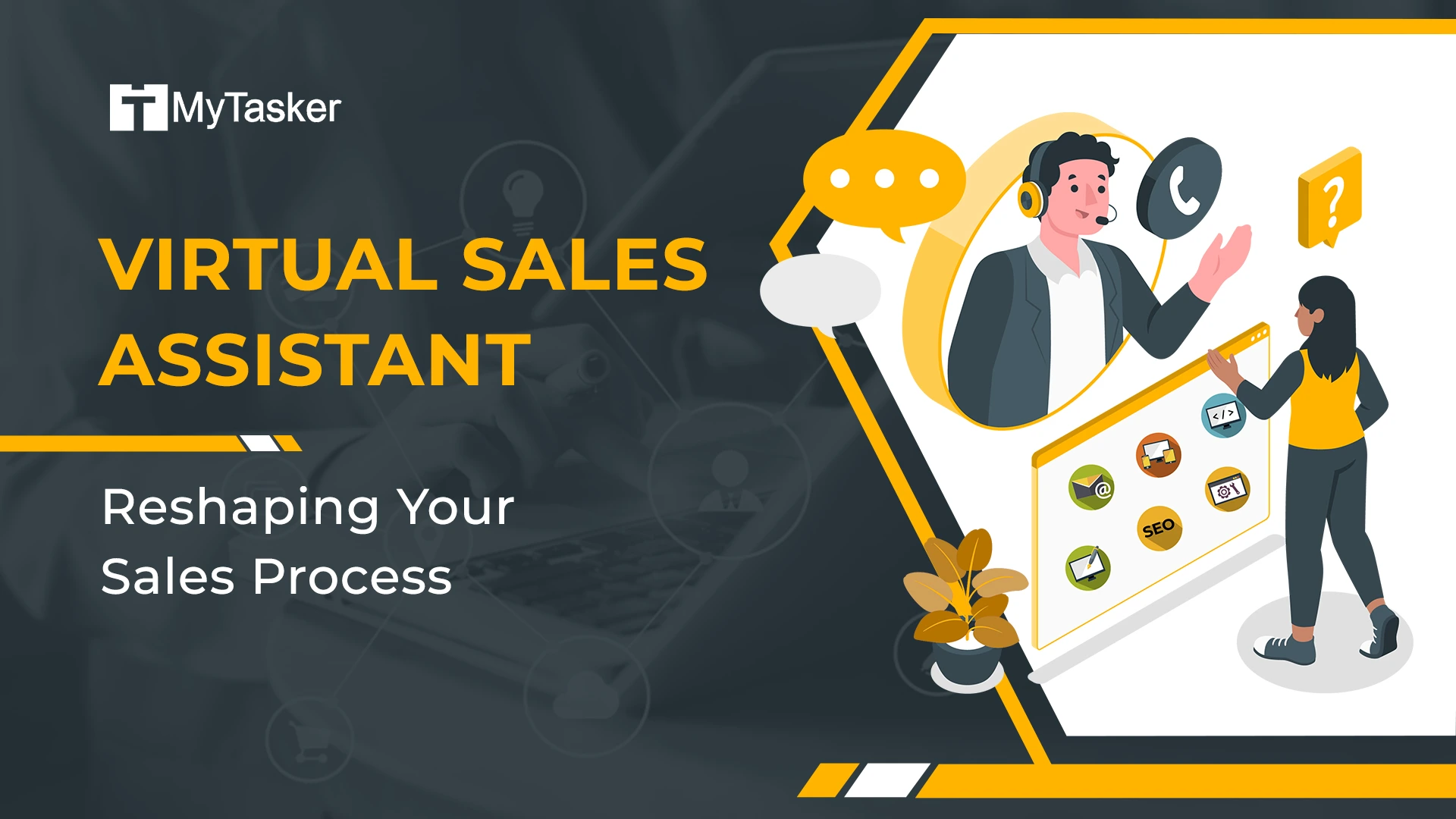
A virtual sales assistant is a remote professional (or, in some cases, an AI-powered tool) that handles lead research, CRM updates, data enrichment, outreach sequences, and calendar booking so you or your sales team can focus purely on closing.
The strongest results often come from combining a human remote sales assistant with a virtual sales AI assistant. Humans bring judgment, empathy, and intuition-driven communication for complex scenarios and sales bottlenecks. AI handles high-volume, repetitive work 24/7. When both are properly vetted and assigned, they become powerful, valuable assets that boost the number of deals closed and overall business growth.
What Do Virtual Sales Assistant Services Do?
Virtual Sales Assistant Services provide remote, professional support that runs your entire sales process so you don’t have to hire full-time local staff. A specialist provider assigns trained sales virtual assistants (also called a Sales VA or remote sales assistant), individuals or small dedicated teams, who handle both core sales tasks and supporting administrative tasks from a remote location.
What the service delivers:
-
Lead qualification and appointment setting
-
Handling inquiries and product questions
-
Generating quotes, proposals, and presentations
-
Running demos
-
Order processing and tracking
-
Consistent follow-ups via phone calls, emails, and messages
-
Cold calling and warm outreach
-
CRM management and data hygiene in customer relationship management (CRM) systems
-
Lead nurturing and email sequences
-
Upselling, cross-selling, and business development
-
Customer support and feedback collection
-
Pipeline reporting, sales data tracking, and performance metrics
-
Calendar management and scheduling meetings
-
Time management of routine and time-consuming tasks
A well-run service also acts as an early-warning system. By keeping your CRM clean and updated daily, the team surfaces stalled deals and pipeline leaks that internal teams often miss. They capture after-hours and cross-timezone inquiries and convert them into next-day opportunities.
Why Do You Need a Virtual Sales Assistant?
Online marketing makes inbound leads competitive. When a lead hits your inbox or CRM, speed matters. 78% of B2B buyers choose the company that responds first—not necessarily the best or cheapest. Prospects often contact competitors at the same time, so the first meaningful reply frequently wins.
One client increased lead conversion by 30% simply by changing Meta ad calls-to-action from form fills to WhatsApp, enabling near-instant conversations. A skilled Sales VA sends a quick initial response, then follows with a detailed, thoughtful answer on schedule: protecting both speed and quality.
Repetitive sales tasks and administrative tasks pull your team members away from closing deals and achieving sales goals. A sales virtual assistant takes ownership of these specific tasks so your sales professionals (and even your marketing team) can focus on high-value work. They cross time zones and language barriers, work in tandem with operations, rekindle relationships when clients seem unsatisfied, and act as long-term partners rather than one-time closers.
Whether you operate in Real Estate, SaaS, professional services, or any other industry, a remote sales assistant becomes a valuable asset that elevates operations without exhausting your existing team.
Key Benefits of a Sales VA
Improved Productivity
The VA can shoulder routine tasks at every stage, freeing your team from overload and reducing errors.
Enhanced Lead Management
Every lead is properly nurtured from outreach to close while your team focuses on decision-making.
Cost Efficiency
Avoid office space, equipment, benefits, and management overhead. Pay only for the hours or package you need from a global talent pool.
Scalability & Flexibility
Expand or reduce support easily as sales team needs change.
Stronger Customer Engagement & Follow-Ups
Consistent phone calls, emails, and relationship-building improve retention.
Specialized Skill Set
Experienced Sales VAs bring industry knowledge, data analysis abilities, and proven processes from day one.
Best Practices for Using Virtual Sales Assistant Services
-
Clearly define the specific tasks and expected outcomes before onboarding.
-
Combine human judgment with AI for high-volume work whenever possible.
-
Prioritize fast initial responses while protecting quality on complex inquiries.
-
Maintain strict CRM hygiene and daily data updates as a non-negotiable standard.
-
Align the VA with your operations and marketing team for seamless handoffs.
-
Review performance metrics regularly and adjust the scope as needed.
-
Start with a trial period and request relevant Case Studies.
How a Virtual Sales Assistant Modifies Your Sales Process
-
Lead Generation: Qualifies and prioritizes high-potential leads.
-
CRM Management: Keeps customer relationship management (CRM) systems accurate and actionable.
-
Follow-Up Campaigns: Runs systematic sequences that keep the pipeline moving.
-
Sales Pipeline Oversight: Tracks every stage and flags delays early.
-
Sales Reporting & Data Analysis: Delivers clear insights that support smarter decision-making.
-
Calendar & Meeting Management: Handles scheduling meetings, reminders, and coordination seamlessly.
How to Hire the Right Virtual Sales Assistant
-
Clearly define the specific tasks and sales team needs you want covered.
-
Prioritize relevant experience and the right skill set (especially in your industry, such as Real Estate).
-
Assess communication skills, technical aptitude with CRM systems, and cultural fit.
-
Start with a trial period to evaluate performance.
-
Review Case Studies from the provider to see proven results.
It’s time to enrich and empower your sales team with a Virtual Sales Assistant.
Frequently Asked Questions (FAQs)
What exactly does a sales virtual assistant do on a daily basis?
A Sales VA handles lead qualification, cold calling, phone calls, CRM management, scheduling meetings, follow-ups, proposal drafting, and reporting—essentially all routine and time-consuming sales tasks so your team can focus on closing.
Can a virtual sales assistant work with my existing CRM systems?
Yes. Most experienced remote sales assistants are proficient with popular customer relationship management (CRM) platforms and can adapt quickly to your tools.
Is a Sales VA only useful for large teams?
No. Small businesses and solopreneurs often benefit the most because a single VA can cover multiple sales and administrative tasks cost-effectively.
How is a sales virtual assistant different from a Marketing Assistant?
A Sales VA focuses on revenue-generating activities (lead conversion, pipeline management, closing support), while a Marketing Assistant typically handles content, campaigns, and brand awareness. Some VAs can support both areas depending on their skill set.
Will the assistant understand my industry (for example, Real Estate)?
Reputable providers match you with VAs who have relevant industry experience. Always ask for Case Studies and industry-specific examples during the hiring process.
How do Virtual Sales Assistant Services help with business development?
They free your team to focus on strategy and relationships while the VA executes consistent outreach, follow-ups, and data analysis that drive measurable business development results.
Can I combine a human Sales VA with AI tools?
Yes. Many businesses achieve the best results by letting AI handle high-volume routine tasks while the human VA manages judgment-based communication, complex negotiations, and relationship building.
Virtual Sales Assistant Services don’t just “assist” with sales. They actively run and optimize your sales operation remotely, turning time-consuming tasks into consistent progress toward your sales goals.