Most social media platforms offer native scheduling features. This means you can log into the app, create a draft, and schedule the post. It is great because each platform has different peak times.
So, it helps you schedule posts when your audience is most active.
However, you need a social media scheduler when you work with a team, post on multiple social media platforms at different times, and need a dashboard that offers analytics of different platforms, a visual calendar, and suggestions regarding future posts in one place.
I have often seen that switching between five different apps becomes very difficult. You eventually miss posting on some platforms. And that is exactly when you need free third-party schedulers.
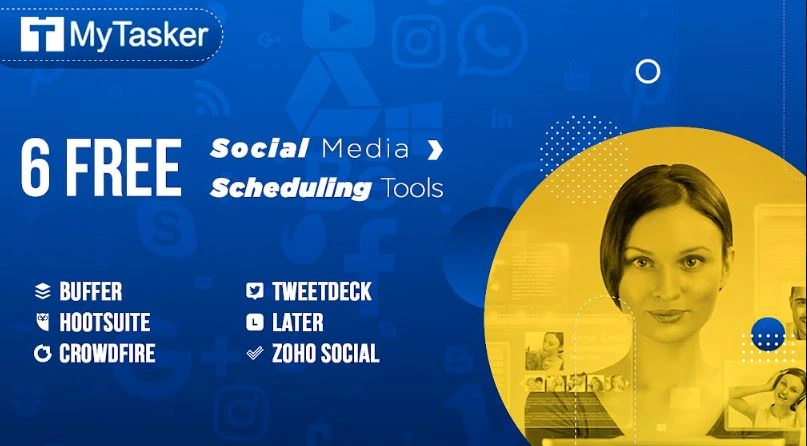
6 Free Social Media Scheduling Tools With No Card Required
Overview of free versions
- Buffer suits solo creators looking for a simple scheduling tool.
- Metricool is the best when you create analytics-based content. You need an advanced analytics and competitor tracking tool.
- Publer supports multi-platform scheduling. It's a great tool for a starter.
- Pallyy provides analytics and 200 mb storage. An excellent tool if you create image-only posts.
- Social Champ is a gem to collaborate with teams, approve posts, and manage scheduling.
- Planable is another great social media scheduler for teams. It provides feed and grid view, a media library, and a visual content calendar.
If you plan to schedule posts on Instagram and Facebook, then nothing can beat Meta Business Suite.
One aspect that I checked while creating this list was whether users of these software tools had ever experienced any hacks or data compromises. So, I did my research, and I haven’t found any prominent news reports mentioning such incidents recently.
Security Track Record of the Free Social Media Schedulers
Buffer suffered an access token breach in 2013. I kept it in this blog because the way they dealt with it was commendable.
They were extremely transparent and dealt with the entire situation maturely. They published a full engineering post-mortem report and have maintained a spotless security infrastructure ever since. I have been using it since the breach. We have never heard of any such incident or found any such incident in the news or CVE databases, and during my research, I found its track record spotless.
Metricool, Publer, Pallyy, Social Champ, and Planable have clean security track records, with zero public data breaches or infrastructure leaks recorded in security or CVE databases.
Because using a tool can make your life easier by helping you schedule posts. But remember, you have to give access to your social media channels to these tools.
So, it’s always better to use renowned ones or those that have a good track record. It’s the biggest green flag you need to consider. Always, no matter which software you use and for what purpose, if you have to share your information or credentials or connect your email or social media accounts, you need to check the app’s background to see if any sort of compromise, malicious event, or activity has happened in the past.
1. Buffer
It is best for smooth multi-platform scheduling without complexity. Buffer has a free plan that gives you one user, up to three channels, and ten scheduled posts per channel at a time. So once your posts go out, the slots refill. It also gives you access to an AI assistant, 30 days of insights, and a community inbox. Buffer supports Instagram, Facebook, LinkedIn, X, TikTok, Threads, Pinterest, YouTube Shorts, Google Business Profile, Bluesky, and Mastodon. If you’re looking for a reliable dashboard that actually works across networks and is easy to understand, nothing can beat Buffer. If you’re not an agency, then Buffer can take care of your scheduling needs.
2. Metricool
Metricool has a permanently free plan that requires no credit card for activation. You can add one brand, which cannot be deleted. LinkedIn and X are not available. You can schedule a maximum of 20 posts and access analytics history for the last 30 days. You can add a maximum of five competitors, which cannot be removed. You get five AI credits per month. You can schedule posts on Instagram, Facebook, TikTok, YouTube, Pinterest, Google Business Profile, Threads, Twitch, and Bluesky. It is great for freelancers, small business owners, and solo creators.
3. Publer
Publer also has a forever free plan and needs no credit card for activation. It lets you connect up to 3 social accounts, excluding X. You schedule posts on LinkedIn, Instagram, Facebook, Pinterest, YouTube, Google Business Profile, TikTok, Threads, Bluesky, and more. The premium version allows you to connect X. If you’re someone who is starting with social media management, it is a great tool for you.
4. Pallyy
Free to use. No card required for activation. Get 1 user and can schedule 15 posts per month (max) in the free version. It is limited to image posts and provides you with 30 days of analytics and 200 MB media storage. It's excellent for solo creators. If you want a social media scheduler that does light image-based scheduling across multiple networks, it can suit you well. It supports LinkedIn, TikTok, Pinterest, Google Business Profile, YouTube, X (Twitter), and Threads. The cons are that you cannot use video, Reels, or carousels under the free version. For that, you need to upgrade the version.
5. Social Champ
Its free version needs no card for activation. Get 1 user and up to 3 social accounts in the free version. Supports TikTok, Facebook, Instagram, LinkedIn, Google Business Profile, and Threads. You get a content calendar, basic media library, and social inbox with limited analytics. It lets you schedule images, text, as well as video posts. The con is the tight limits. You get 3 accounts and can schedule 15 posts every month. Other caveats are that X, Pinterest, and WhatsApp are restricted on the free plan. If you need a free scheduling tool that lets you schedule posts on Meta, LinkedIn, and TikTok, it’s one of the best choices.
6. Planable
Permanent free version. No card needed for activation. It comes with users and workspaces. You get access to all core features, including multi-level approvals. It supports Instagram, X, LinkedIn, Google Business Profile, TikTok, YouTube, Threads, and Pinterest. There is one caveat: You can only create 50 posts. Once that limit is reached, you need to upgrade. You can schedule text, videos, images, and carousels.
Even with the free version, it gives you a visual content calendar, feed and grid views, and a media library, which is great for strong team collaboration. Your team can comment and approve posts before they go live.
You don’t get access to the social inbox and analytics, as they are available only as paid features.
FAQs: Common Questions for Social Media Schedulers
Are free plans actually usable long-term?
Yes, if your needs remain light to moderate posting. However, when you go for more activities, need more analytics and wish to explore various other platforms, free tools create restraints. And then it is time to upgrade.
Why not just use the native schedulers for everything?
If native schedulers suffice for your needs, you can use them for your social media scheduling needs. However, when you post content on multiple apps that are not part of the same corporation, it becomes difficult to manage them. The result is missed posts and a lost overview. Third-party scheduling tools are great time savers. Paid versions of prominent tools cover most of the social media channels where we engage and post content.
Do these tools support all platforms?
No. Their free tiers often restrict LinkedIn, X, or newer networks. Always check the ones that support both LinkedIn and X. For Facebook and Instagram, you can use Facebook Meta Suite.
Is there any completely unlimited free multi-platform tool?
No third-party multi-platform post scheduler offers unlimited access under the free version. Meta Business Suite is unlimited, but only for Facebook and Instagram. Everything else is freemium. Comes with caps.
Should I start with a free tool or go straight to paid?
Start with a free version and then test how it works, get familiar with the scheduler interface and check whether the dashboard is simple and worth your workflow. Test for at least two weeks.
Conclusion
With the availability of native scheduling features on different social platforms, the demand for social media scheduling tools has become limited of late. However, when you need to manage multiple platforms in one place, you need them. I would suggest starting with the native tools if you rarely post content or post 1 to 4 times a month.
If you need help with managing your social media, along with creating graphics, reels, captions, and paid marketing, hire a virtual social media marketing assistant who not only works as your brand manager but also ensures your brand sees substantial growth in the long run.